
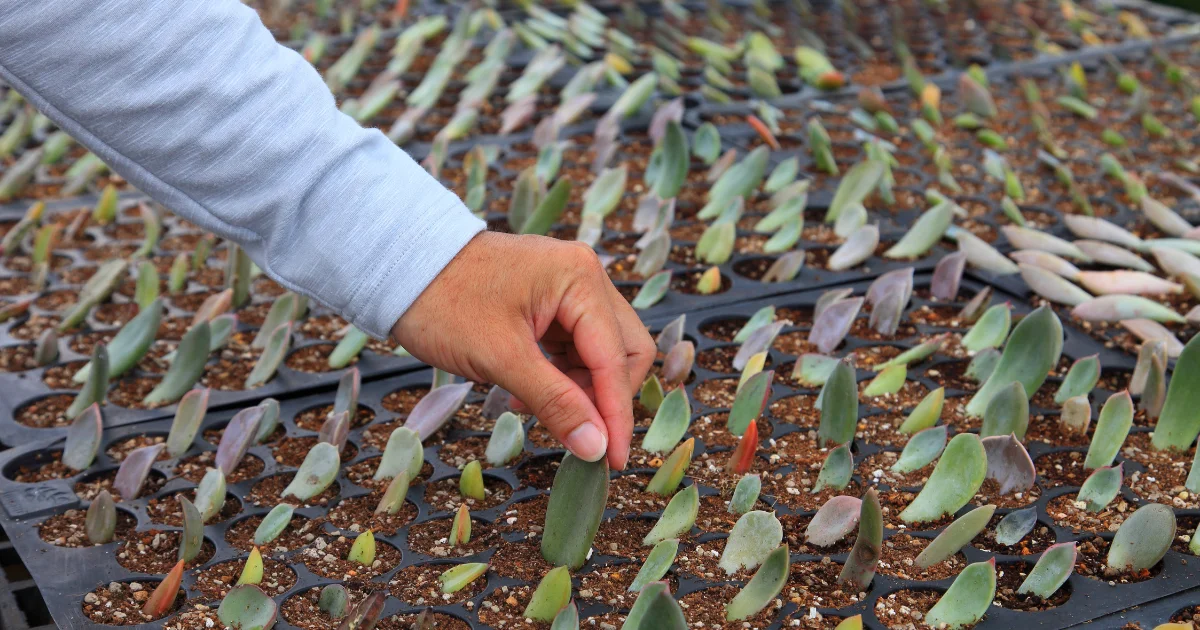
Did you know that succulents are one of the easiest plants to propagate from cuttings, with a success rate of over 80% if done correctly?
To begin your journey into rooting succulent cuttings, you need to master the art of selecting the right cuttings from a healthy parent plant.
But that’s just the start; there are essential steps and techniques you must follow to ensure those cuttings develop strong roots and grow into thriving plants.
So, let’s get started on this fascinating and rewarding process.
Key Takeaways – How To Root Succulent Cuttings
- Select healthy, firm cuttings free from damage for successful rooting.
- Allow cuttings to callous before planting to prevent rot.
- Use well-draining soil mix to avoid waterlogged roots.
- Provide bright, indirect light and balanced watering for optimal growth.
Selecting Healthy Succulent Cuttings – How To Root Succulent Cuttings
To ensure successful rooting, choose plump, firm succulent cuttings free from any signs of damage or rot. When selecting your cuttings, opt for pieces that are healthy and vibrant, as these will have a higher chance of developing roots successfully. Look for stems that appear to be hydrated and full of life, as they’ll provide the best foundation for new growth.
Inspect the chosen cuttings carefully, ensuring there are no soft spots, discoloration, or squishy areas which could indicate rot or disease. Healthy cuttings are more likely to thrive and establish roots quickly, leading to stronger and more resilient plants in the long run.
Remember that the quality of your cutting directly impacts the success of the propagation process. By starting with healthy, undamaged pieces, you set yourself up for a higher probability of successful rooting and future growth. Choose wisely, and your efforts in rooting succulent cuttings will be rewarded with flourishing new plants.
Preparing the Cuttings for Rooting – How To Root Succulent Cuttings
Get your succulent cuttings ready for rooting by ensuring they’ve calloused over before planting. This step is crucial to prevent the cuttings from rotting once they’re placed in soil. To prepare the cuttings, start by taking healthy stems from your succulent plant and allowing them to dry out for a few days. Place the cut ends in a shaded area with good airflow to promote callusing. Once the cut ends have calloused, they’re ready for planting.
Check the cuttings regularly during the callousing process to ensure they’re healing properly. You can gently touch the ends to see if they’ve hardened. Once calloused, you can proceed with planting them in the soil. Avoid planting uncalled cuttings, as they’re more susceptible to rot and may fail to root successfully.
Choosing the Right Soil Mix – How To Root Succulent Cuttings
Ensure your succulent cuttings have the best chance of rooting successfully by selecting the right soil mix for planting. The ideal soil mix for succulent cuttings should be well-draining to prevent waterlogged roots, as these plants are prone to rot in overly moist conditions. A mixture of equal parts potting soil and perlite or coarse sand is recommended to promote drainage and aeration. You can also add in some small pebbles or pumice to further enhance drainage and prevent compaction.
When choosing a soil mix for your succulent cuttings, opt for a mix that’s specifically formulated for cacti and succulents. These mixes are designed to provide the right balance of nutrients while ensuring proper drainage. Avoid using regular garden soil, as it tends to retain too much moisture, which can lead to root rot.
Remember that the type of soil mix you choose plays a crucial role in the success of rooting your succulent cuttings. By selecting a well-draining mix tailored to the needs of succulents, you set the stage for healthy root development and overall plant growth.
Providing Optimal Light Conditions – How To Root Succulent Cuttings
Selecting the right amount of sunlight is crucial for the successful growth of your succulent cuttings. Succulents thrive in bright, indirect light. Find a spot near a window where your plants can receive sunlight for about 6-8 hours a day.
If you notice your succulents stretching or leaning towards the light source, it might be an indication that they need more sunlight. On the other hand, if you observe sunburn or the leaves turning brown, your succulents could be getting too much direct sunlight. In such cases, consider moving them to a spot with filtered light or providing some shade during the hottest parts of the day.
Watering and Caring for Rooting Succulents – How To Root Succulent Cuttings
To ensure successful growth of your rooting succulents, it’s important to understand the proper watering and care they require. When it comes to watering your succulent cuttings, it’s crucial to strike a balance. Overwatering can lead to root rot, while underwatering can hinder root development. Allow the soil to dry out completely between watering sessions, usually about every 7-10 days, depending on the succulent type and environmental conditions.
In addition to watering, caring for your rooting succulents involves providing adequate airflow. Good air circulation around the plants helps prevent moisture buildup, reducing the risk of fungal diseases. You can achieve this by spacing out your succulent cuttings and ensuring they aren’t overcrowded.
Moreover, during the rooting process, avoid fertilizing your succulents. They’ve minimal nutrient requirements at this stage, and adding fertilizer can harm the delicate roots. Instead, focus on providing the right amount of water and light to support healthy root development in your succulent cuttings.
Conclusion
Now that you’ve learned the ins and outs of rooting succulent cuttings, you’re well on your way to becoming a succulent pro!
Remember, with a little care and attention, your succulents will thrive and grow into beautiful plants.
So don’t be afraid to get your hands dirty and give it a try – your green thumb will thank you!


