
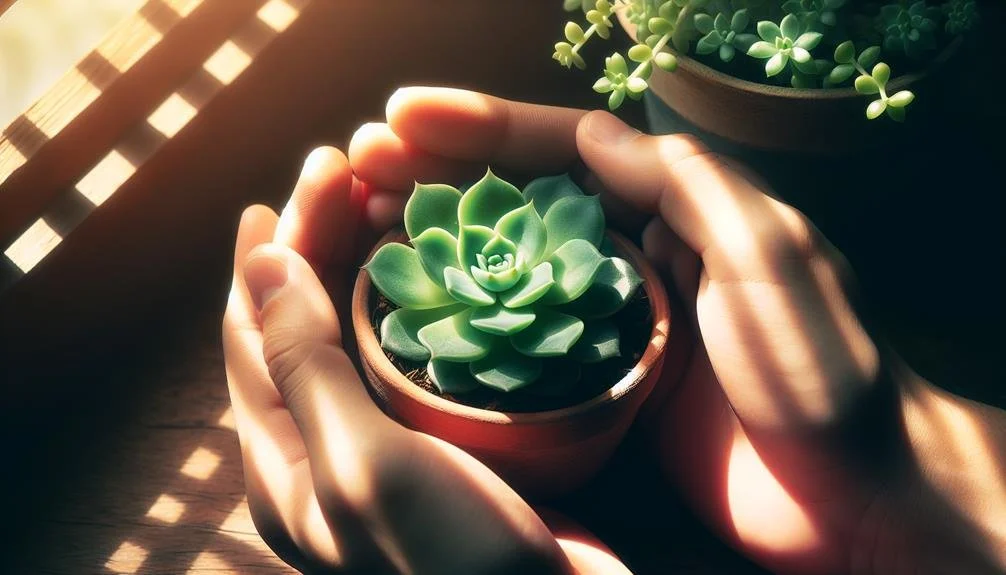
Imagine your succulents basking under the gentle glow of the morning sun, their vibrant hues and unique shapes adding a touch of nature to your living space.
But for these resilient plants to thrive, they require proper care and attention. From choosing the perfect pot to troubleshooting common issues, these 10 easy tips will set you on the path to succulent success.
Find out how to create an optimal environment that will keep your succulents healthy and flourishing with minimal effort.
Choosing the Right Pot
When selecting a pot for your succulent, consider the size and material to ensure proper growth and drainage. The size of the pot is crucial as it directly impacts the health of your succulent. A pot that's too small can restrict the roots, leading to stunted growth, while a pot that's too large can hold excess water, causing root rot. Opt for a pot that provides ample space for the roots to grow and has drainage holes at the bottom to prevent water from accumulating.
Additionally, the material of the pot is essential for the well-being of your succulent. Terracotta pots are a popular choice as they're porous, allowing excess moisture to evaporate and preventing waterlogged soil. However, if you live in a hot climate, the porous nature of terracotta pots may cause the soil to dry out too quickly. In such cases, ceramic or plastic pots can help retain moisture better. Consider these factors when choosing the right pot for your succulent to ensure thriving growth.
Providing Adequate Sunlight
To ensure the optimal growth of your succulent, it's essential to provide adequate sunlight. Succulents thrive in bright light, so find a sunny spot where your plant can soak up the sun for at least six hours a day. Place your succulent near a south or east-facing window for the best results. If you notice your plant starting to stretch or lean towards the light, it may be an indication that it needs more sun exposure.
Keep an eye on your succulent throughout the day to ensure it's getting enough light. If you notice any signs of sunburn, such as brown or white spots on the leaves, consider moving the plant to a spot with slightly less direct sunlight. Remember that different succulent varieties have varying light requirements, so it's essential to research the specific needs of your plant.
Watering Wisely
Ensuring that your succulent receives the right amount of water is crucial for its health and growth. Succulents are adapted to survive in arid conditions, storing water in their leaves, stems, or roots. When watering your succulent, it's essential to strike a balance to prevent issues like root rot. Overwatering can lead to soggy soil, causing the roots to suffocate and potentially rot. On the other hand, underwatering can result in shriveled leaves and stunted growth.
To water your succulent wisely, check the soil moisture before watering again. Stick your finger into the soil about an inch deep – if it feels dry, it's time to water. When watering, do so thoroughly until water drains out of the bottom of the pot. Allow the soil to dry out completely between watering sessions. Remember, it's better to underwater than overwater your succulent.
Using Well-Draining Soil
For optimal growth and health of your succulent, using well-draining soil is essential. Succulents are prone to root rot if their roots sit in waterlogged soil for too long. To prevent this, ensure your succulent is potted in a well-draining soil mix. This type of soil allows excess water to flow through quickly, preventing water from pooling at the bottom of the pot and suffocating the roots.
You can create a well-draining soil mixture by combining regular potting soil with perlite, coarse sand, or pumice. These additives help increase drainage and aeration, providing the roots with the oxygen they need to thrive. When repotting your succulent, be sure to choose a pot with drainage holes at the bottom to further assist in water drainage.
Avoiding Overcrowding
Consider spacing out your succulents appropriately to avoid overcrowding, ensuring each plant has ample room to grow and thrive. Overcrowding can lead to competition for resources like sunlight, water, and nutrients, ultimately hindering the healthy development of your succulents.
When plants are too close together, airflow may be restricted, creating a damp environment that can promote diseases such as root rot. To prevent overcrowding, make sure to plant your succulents with enough space between them based on their mature size. This won't only allow each plant to receive adequate light and airflow but also prevent them from becoming leggy or misshapen in their growth.
If you notice overcrowding in your succulent arrangement, consider repotting them into larger containers or spacing them out in your garden. By maintaining proper spacing, you'll create an environment where your succulents can flourish and showcase their natural beauty.
Pruning and Grooming
To maintain the health and aesthetics of your succulents, regularly prune and groom them to remove dead or overgrown parts. Trimming off dead leaves or stems not only improves the appearance of your succulents but also promotes new growth. Use clean pruning shears to make precise cuts, ensuring you don't damage the healthy parts of the plant. When grooming your succulents, remove any dried-up or withered leaves by gently pulling them off or cutting them close to the base. This helps prevent pests and diseases from taking hold and keeps your succulents looking vibrant.
Additionally, pruning and grooming can help control the size and shape of your succulents. If your plants are growing too tall or leggy, trimming them back can encourage a more compact and bushy growth habit. Remember to wear gloves when handling certain succulents to avoid irritation from the plant's sap or spines. Regularly inspect your succulents for any signs of damage or disease while pruning and grooming to catch and address issues early on.
Monitoring for Pests
Regularly inspect your succulents for any signs of pests to ensure their health and prevent infestations. Pests like aphids, mealybugs, and spider mites can damage your plants if left unchecked.
Check both the top and bottom of the leaves, along the stems, and even in the soil for any pests or their eggs. Look out for yellowing or discolored leaves, webbing, or sticky residue, as these are common indicators of pest presence.
If you notice any pests, isolate the affected plant to prevent the infestation from spreading. To remove pests, gently wipe them off with a cotton swab dipped in rubbing alcohol or spray them with an insecticidal soap. Avoid using chemical pesticides, as they can harm your succulents.
Regularly monitoring for pests will help you catch and address any issues early, keeping your succulents healthy and thriving.
Seasonal Considerations
When caring for succulents, adjust your maintenance routine based on seasonal changes to ensure optimal growth and health. In the warmer months of spring and summer, succulents are actively growing and may require more water. Monitor the soil moisture levels closely and water when the top inch of soil is dry. However, be cautious not to overwater, especially during periods of intense heat. Providing adequate airflow around the plants can help prevent issues like rot.
As the temperatures start to drop in fall and winter, succulents enter a period of dormancy. Reduce watering frequency during these months as the plants' growth slows down. Place succulents in areas with plenty of sunlight to help them get through the darker, colder days. If you live in a region with harsh winters, consider moving your succulents indoors to protect them from frost damage. By adapting your care routine to the changing seasons, you can help your succulents thrive all year round.
Fertilizing Sparingly
Consider fertilizing your succulents sparingly to avoid causing nutrient imbalances or overstimulating growth. Succulents are known for their ability to thrive in nutrient-poor soil, so they don't require frequent fertilization. Using a balanced, water-soluble fertilizer diluted to half or quarter strength can provide the necessary nutrients without overwhelming the plants.
During the growing season in spring and summer, you can fertilize your succulents once a month. However, in fall and winter when growth slows down, it's best to skip fertilizing altogether or reduce it to once every few months. Remember, less is more when it comes to feeding your succulents. Too much fertilizer can lead to burnt roots or excessive growth, which may make your succulents look leggy or lose their vibrant colors.
Always err on the side of caution and observe how your succulents respond to the fertilization. If you notice any signs of overfertilization like yellowing leaves or mushy stems, stop fertilizing immediately and flush the soil with water to remove any excess nutrients. By fertilizing sparingly, you can help your succulents stay healthy and happy.

Troubleshooting Common Issues
To troubleshoot common issues with your succulents, start by examining the condition of their leaves and stems for any signs of discoloration or softness. Discoloration could indicate overwatering, sunburn, or nutrient deficiencies, while softness might suggest root rot caused by excessive moisture. If you notice mushy or blackened areas, you may need to adjust your watering schedule and ensure proper drainage to prevent further damage.
Another common problem is etiolation, which occurs when succulents don't receive enough sunlight. Leggy or stretched-out growth is a clear sign of this issue. To remedy it, move your plants to a sunnier location and prune any elongated stems to encourage compact, healthy growth.
Pests such as aphids, mealybugs, or spider mites can also infest succulents, causing damage to the leaves and overall plant health. Treat infestations promptly with insecticidal soap or neem oil, ensuring to cover all affected areas thoroughly.
Conclusion
In conclusion, taking care of succulents doesn't have to be difficult. By following these 10 easy tips –
- choosing the right pot,
- providing adequate sunlight,
- watering wisely,
- using well-draining soil,
- avoiding overcrowding,
- monitoring for pests,
- considering seasonal changes,
- fertilizing sparingly,
- and troubleshooting common issues –
you can keep your succulents healthy and thriving.
With a little bit of attention and care, your succulents will continue to bring beauty to your home or garden for years to come.


