
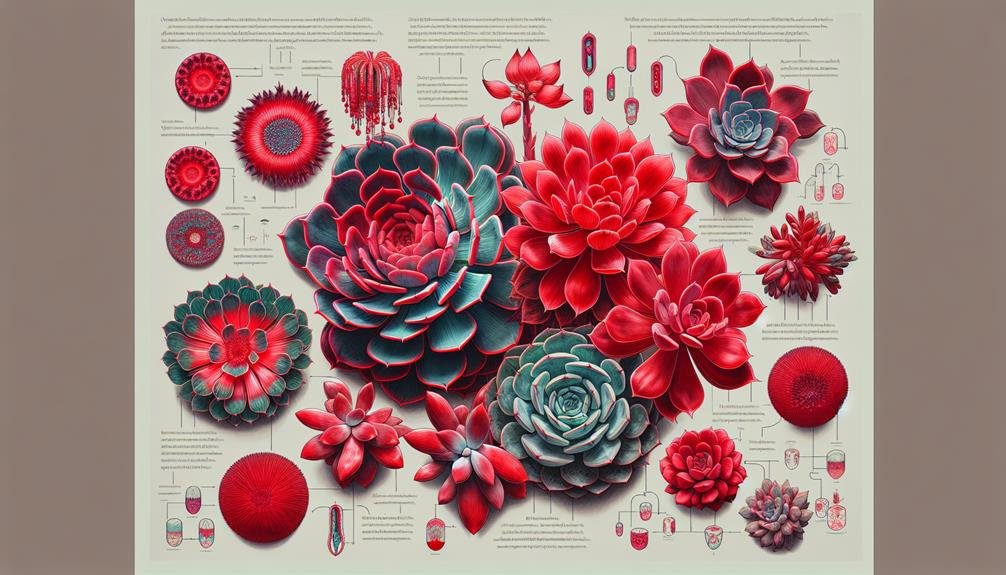
Just like a chameleon adjusts its colors to blend in, succulents have a fascinating ability to turn red under certain conditions.
Have you ever wondered what causes this striking transformation in these desert plants? Understanding the science behind how succulents develop their red hues can provide valuable insights into their overall health and well-being.
Explore the intricate process and factors that contribute to succulents donning their vibrant red attire, and you may uncover surprising secrets about these captivating plants.
Factors Influencing Succulent Redness
To understand why succulents turn red, consider the factors influencing their vibrant coloration. One key factor is sunlight exposure. When succulents receive intense sunlight, they produce red pigments as a natural defense mechanism against the sun's harmful effects. This process, known as photoprotection, helps shield the plant from excessive light and heat.
Another factor contributing to succulents turning red is temperature. Cold temperatures can trigger the production of red pigments in succulents, acting as a form of protection against frost and cold stress. In response to these environmental conditions, succulents adjust their pigmentation to adapt and survive.
Furthermore, the type of succulent plays a crucial role in determining its redness. Certain species are genetically predisposed to exhibit red hues more prominently than others. Factors such as genetics, species variation, and individual plant characteristics all contribute to the diverse range of red shades seen in different succulents.
Understanding Stress in Succulents
Succulents undergo various forms of stress that can influence their growth and appearance, impacting factors such as coloration and overall health. Stress in succulents can be caused by various factors such as overwatering, under-watering, extreme temperatures, poor soil conditions, or pests. When subjected to stress, succulents activate their defense mechanisms, which can lead to changes in pigmentation, causing them to turn red or develop other vibrant colors. This response is a survival mechanism aimed at protecting the plant from further damage.
Stressed succulents may exhibit signs such as wilting, leaf drop, or changes in texture. These indicators are the plant's way of signaling that it isn't in an ideal environment. To help your succulents thrive, it's essential to identify and address the stressors they're facing promptly. By providing the right growing conditions, such as well-draining soil, adequate sunlight, and proper watering, you can minimize stress and promote healthy growth in your succulents.
Impact of Sunlight on Coloration
When exposed to varying levels of sunlight, succulents exhibit distinct changes in coloration, reflecting their response to environmental conditions. Sunlight plays a crucial role in determining the color intensity of succulents.
Succulents exposed to direct sunlight often develop vibrant red, orange, or purple hues due to stress-induced pigments like anthocyanin. The more intense the sunlight, the more pronounced these colors become. On the other hand, succulents grown in low-light conditions may display muted or green coloration as a result of reduced stress levels.
It's essential to strike a balance between providing enough sunlight to encourage color development and avoiding excessive exposure that can lead to sunburn or color fading. Observing how your succulents respond to different light conditions is key to maintaining their health and vibrant coloration. Remember to gradually acclimate them to changes in sunlight to prevent shock and ensure they thrive in their environment.
Red-Turning Succulent Species
Frequently, succulent species that turn red in response to sunlight stress include Echeveria agavoides and Graptosedum 'California Sunset'. These striking plants develop their vibrant red hues as a protective mechanism against intense sunlight and environmental conditions.
Echeveria agavoides, also known as the Lipstick Echeveria, features rosettes of green leaves that blush red at the tips when exposed to bright light. Similarly, Graptosedum 'California Sunset' displays a mix of green, yellow, and red tones, with the red becoming more pronounced under stress.
Another popular red-turning succulent is Sedum nussbaumerianum, or Coppertone Stonecrop, which shifts from green to coppery red in high light situations. These species' color changes serve to shield their tissues from excessive sunlight by producing pigments like anthocyanin.
It's important to note that while these succulents thrive in sunlight, prolonged exposure to extreme conditions can harm them. Therefore, it's crucial to provide them with the right balance of light to maintain their beautiful red hues and overall health.
Tips for Enhancing Red Pigmentation
To enhance the red pigmentation in your red-turning succulents, consider adjusting their exposure to sunlight gradually to promote optimal color development. Succulents need plenty of sunlight to produce the vibrant red hues you desire. Start by placing your succulents in a location where they receive indirect sunlight for a few hours a day. As they acclimate to this light intensity, gradually increase their exposure to direct sunlight. Be cautious not to expose them to harsh afternoon sunlight too quickly, as this can cause sunburn and stress, leading to color loss instead of gain.
In addition to sunlight, the red pigmentation in succulents can be enhanced by stressing the plants slightly. To achieve this, slightly reduce your watering frequency while maintaining proper hydration levels. This controlled stress can trigger the succulents to produce more red pigments as a protective measure. Remember to observe your plants closely and adjust their care routine as needed to maintain their health while promoting stunning red coloration.
Conclusion
So there you have it – the secret behind how succulents turn red!
By understanding the factors that influence their coloration, such as stress and sunlight exposure, you can help enhance the red pigmentation in your succulent plants.
Remember to choose red-turning succulent species if you want to add a pop of color to your garden.
With a little care and attention, you can enjoy vibrant and beautiful red succulents in your home or garden.


