
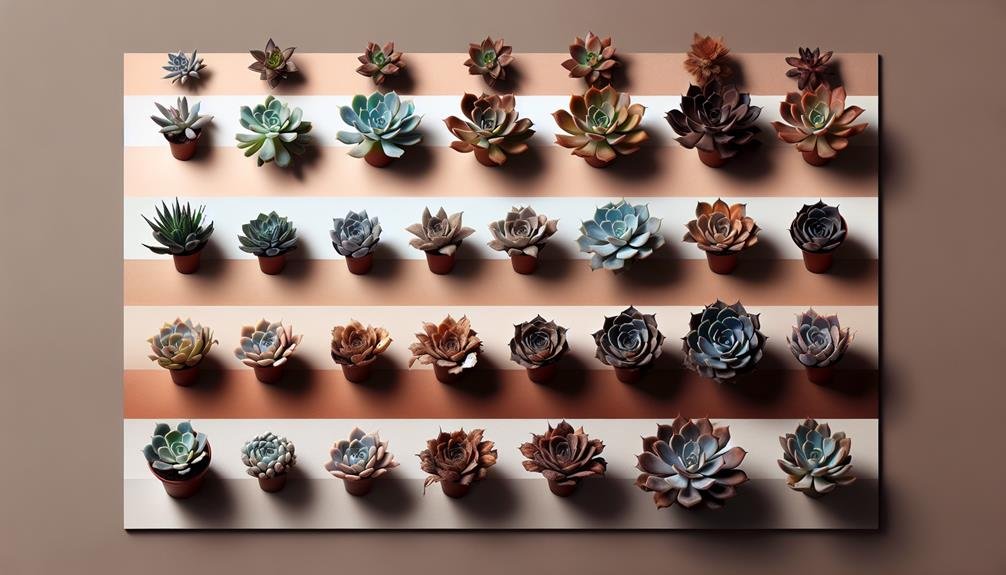
If you've ever wondered why your succulents seem to be turning brown, it's essential to understand that this issue can be more complex than it appears at first glance.
While it's easy to assume that browning is simply a sign of aging or lack of care, there are various factors that can contribute to this phenomenon.
By exploring common reasons such as overwatering, sunburn, pests, and diseases, you'll gain valuable insights into how to maintain the vibrant hues of your succulent collection.
Understanding these intricacies can help you nurture your plants back to health and prevent further browning.
Common Reasons for Browning Succulents
If your succulents are turning brown, it may be due to overwatering or insufficient sunlight. Succulents are known for their low maintenance, but they still require proper care to thrive. Overwatering is a common mistake that many succulent owners make. These plants store water in their leaves, stems, or roots, making them susceptible to root rot if they're watered too frequently. Ensure you allow the soil to dry out completely between waterings to prevent this issue.
On the other hand, insufficient sunlight can also cause succulents to turn brown. Succulents typically require bright, indirect light to maintain their vibrant colors. If your succulents aren't receiving enough sunlight, they may become stressed and start to brown. Consider moving them to a spot where they can get more natural light throughout the day.
Impact of Overwatering on Succulents
Overwatering can lead to detrimental effects on succulents' health and appearance. When you water succulents excessively, their roots can become waterlogged, leading to root rot. This condition deprives the plant of essential nutrients and oxygen, hindering its growth and causing the leaves to turn brown and mushy. Additionally, overwatering creates a hospitable environment for pests and fungal diseases to thrive, further endangering the plant's well-being.
Succulents are adapted to store water in their leaves and stems, making them resilient to drought conditions. However, they aren't well-equipped to handle prolonged periods of excess moisture. Frequent watering disrupts the natural balance of water uptake and storage, disrupting the plant's ability to photosynthesize efficiently. As a result, the succulent may exhibit signs of stress such as wilting, leaf drop, and a general decline in overall health.
To prevent the negative effects of overwatering, ensure that you allow the soil to dry out completely between watering sessions. This practice promotes healthy root growth and helps maintain the vibrant appearance of your succulents.
Understanding Sunburn in Succulents
Succulents can develop sunburn when exposed to intense sunlight for prolonged periods. Just like us, these plants can get sunburned too! Sunburn in succulents often appears as brown or white patches on their leaves. This happens because excessive sunlight exposure damages the plant's tissues, leading to discoloration.
To prevent sunburn, it's crucial to acclimate your succulents gradually to direct sunlight, especially if they were previously kept indoors or in the shade. Start by placing them in a spot with indirect sunlight and gradually increase their exposure to direct sunlight over a few weeks. Additionally, providing some shade during the hottest parts of the day can help protect your succulents from getting sunburned.
Keep an eye on your plants for any signs of sunburn, and if you notice discoloration, move them to a shadier spot to prevent further damage. Remember, a little sun is good, but too much can harm your lovely succulents!
Dealing With Pests on Succulents
When caring for your succulents, it's important to be vigilant against pests that can potentially harm your plants. Common pests that may affect succulents include mealybugs, aphids, spider mites, and scale insects. To deal with these pests, you can first try using a gentle spray of water to dislodge them from your plants. For a more stubborn infestation, consider using insecticidal soap or neem oil, which are effective yet gentle options for controlling pests on succulents. Be sure to follow the instructions on the product label when applying any treatment to your plants.
Regularly inspecting your succulents is key to catching pest problems early. Look out for signs such as webbing, sticky residue, or visible bugs on the leaves or stems of your plants. Quarantine any infected plants to prevent the pests from spreading to others in your collection. By staying proactive and addressing pest issues promptly, you can help keep your succulents healthy and thriving.
Recognizing Diseases in Succulents
To identify diseases affecting your succulents, closely observe any abnormal discoloration or unusual growth patterns on the plants. Look out for signs such as black spots, powdery mildew, or soft rot. Black spots on the leaves could indicate a fungal infection, while a powdery white substance might signal powdery mildew. Soft rot, on the other hand, presents itself as mushy areas on the plant. Root rot is another common issue, usually caused by overwatering or poor soil drainage. Symptoms include wilting, yellowing leaves, and a foul odor emanating from the roots.
Keep an eye out for pests like aphids, mealybugs, or spider mites, as they can weaken the plant, making it more susceptible to diseases. Treat any infections promptly to prevent them from spreading to other succulents. Remove and destroy affected plant parts, and consider using fungicides or insecticidal soaps to control the problem. Maintaining good air circulation and avoiding overhead watering can also help prevent diseases. Regularly inspecting your succulents will ensure early detection and treatment of any issues, keeping your plants healthy and vibrant.
Conclusion
Now that you know the common reasons for browning succulents, you can take proactive steps to keep your plants healthy and vibrant.
Remember to avoid overwatering, provide adequate sunlight, and keep an eye out for pests and diseases.
With proper care and attention, your succulents will thrive and maintain their beautiful green color for years to come.
Keep up the good work!


