
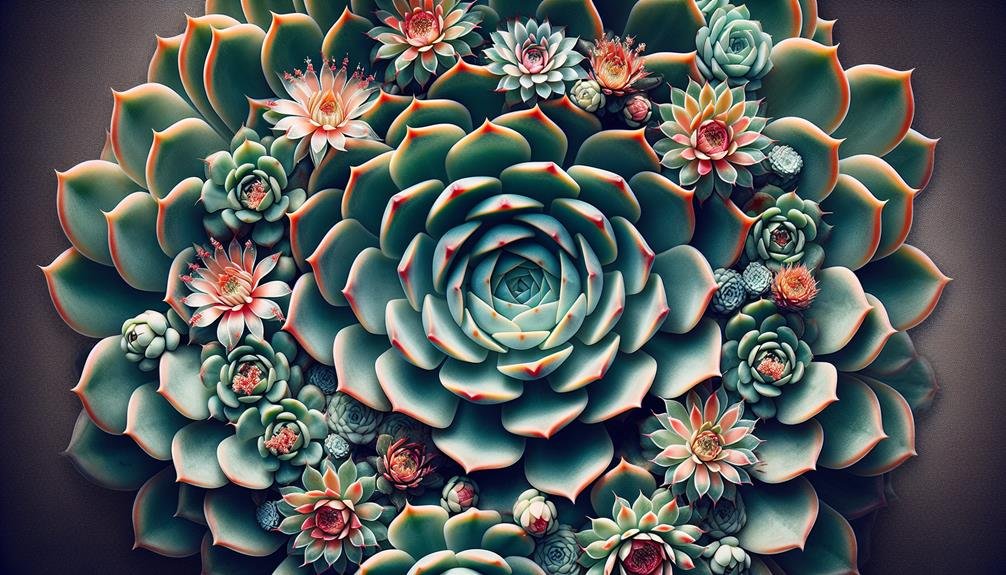
As you marvel at the unique shapes and hues of your succulents, have you ever noticed the delicate blooms that occasionally grace these hardy plants? Understanding how succulents flower can shed light on their fascinating lifecycle.
Discover the intricate mechanisms behind succulent flowering, from the factors that trigger blossoming to the role of pollinators in this process. Unravel the secrets of these resilient plants' flowering patterns and learn how to care for them when they are in bloom.
Anatomy of Succulent Flowers
Understanding the anatomy of succulent flowers can provide insight into their unique characteristics and reproductive processes. Succulent flowers typically consist of four main parts: sepals, petals, stamens, and pistils. The sepals are the outermost part of the flower, usually green and protective in function. As you move inward, you encounter the petals, which are often colorful and attract pollinators. The stamens, responsible for producing pollen, come next. Finally, at the center of the flower, you find the pistil, the female reproductive organ that receives pollen for fertilization.
In succulents, these flower parts may have specific adaptations to suit their arid environments. For example, succulent petals might be thick and fleshy to retain water, or the pistil may have a unique shape to prevent desiccation. Observing these adaptations can deepen your appreciation for the resilience of succulents and how they've evolved to thrive in challenging conditions. By understanding the anatomy of succulent flowers, you gain a better grasp of the beauty and functionality that these plants exhibit.
Factors Influencing Flowering in Succulents
Factors that influence flowering in succulents include environmental conditions, genetic predispositions, and cultural practices. Environmental conditions play a crucial role in determining when and how succulents bloom. Factors such as light intensity, temperature, and humidity levels can all impact the flowering process. Succulents that require full sunlight may not flower if they're placed in a shady spot, while those needing cooler temperatures might struggle to bloom in a hot environment.
Genetic predispositions also contribute to the flowering behavior of succulents. Different species have varying genetic traits that dictate when they'll produce flowers. Some succulents may be more predisposed to flowering under certain conditions, while others may require specific triggers to initiate the blooming process.
Cultural practices, such as watering, fertilizing, and potting techniques, can also influence flowering in succulents. Overwatering, for example, can lead to root rot and inhibit flower production. On the other hand, providing the right balance of nutrients through proper fertilization can encourage healthy growth and blooming. By understanding these factors and tailoring care accordingly, you can help your succulents thrive and bloom beautifully.
Common Succulent Flowering Patterns
When observing common succulent flowering patterns, you may notice distinct cycles and timings that vary among different species. Some succulents, like the Christmas cactus (Schlumbergera), bloom in response to changes in day length, with flowers appearing when days grow shorter. Others, such as the Echeveria, follow a seasonal pattern, flowering during specific times of the year like spring or summer.
Certain succulents, like the Sempervivum, are monocarpic, meaning they flower once in their lifetime before dying. On the other hand, perennial succulents like the Aloe can bloom multiple times throughout the year under the right conditions.
Additionally, succulents exhibit variations in the duration of their flowering period. Some may have short-lived blooms that last only a few days, while others, like the Jade plant (Crassula ovata), can have flowers that persist for weeks. Understanding these common flowering patterns can help you anticipate when your succulents are likely to bloom and appreciate the beauty of their unique reproductive cycles.
Pollination of Succulent Flowers
Pollination plays a crucial role in the reproduction of succulent flowers, facilitating the transfer of pollen between plants for fertilization. Succulent flowers rely on various methods for pollination, including wind, insects, birds, and even water.
Some succulents, like the Agave plant, produce large, showy flowers that attract pollinators such as bees and hummingbirds. These pollinators visit the flowers to feed on nectar, inadvertently transferring pollen from one flower to another as they move between plants.
Other succulents, such as certain cacti, have evolved to be pollinated by specific insects like bees or moths that are attracted to their unique shapes, colors, or scents. In some cases, succulents self-pollinate, where the plant's own pollen fertilizes its own ovules.
Understanding the pollination methods of succulent flowers is essential for their successful reproduction and the formation of seeds, ensuring the continuation of these fascinating plant species.
Caring for Flowering Succulents
To ensure the health and vibrancy of your flowering succulents, proper care and attention to their specific needs are essential.
First, make sure your succulents receive adequate sunlight, as most flowering succulents thrive in bright light conditions. However, be cautious of scorching sun in hot summer months.
Water your flowering succulents sparingly, allowing the soil to dry out completely between waterings to prevent root rot. Use a well-draining soil mix to ensure excess water doesn't accumulate around the roots.
During the flowering period, you can supplement with a balanced fertilizer diluted to half-strength to provide essential nutrients. Prune off any dead flowers or leaves to promote new growth and prevent disease.
Keep an eye out for pests like aphids or mealybugs, and treat them promptly to avoid infestations.
Lastly, if your succulent outgrows its container, consider repotting it into a slightly larger pot with fresh soil to support its growth.
Conclusion
Now that you understand the anatomy of succulent flowers, the factors that influence their flowering, common patterns, pollination process, and how to care for them, you're well-equipped to enjoy the beauty of flowering succulents in your own garden.
Keep nurturing your plants and watching them bloom with love and care.
Happy gardening!


