
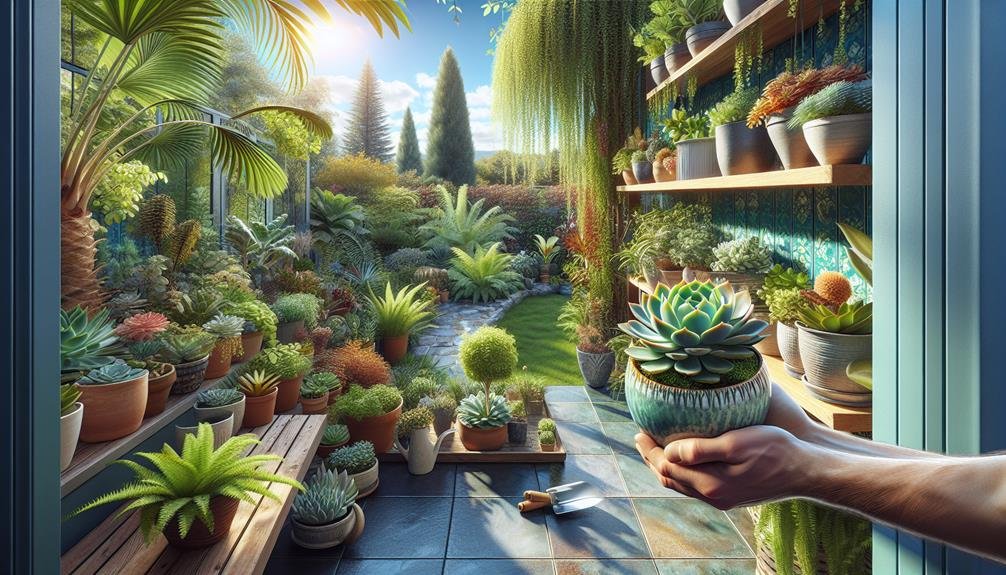
When your succulents are ready to embrace the great outdoors, it's essential to ensure a smooth transition for their well-being. The process involves more than just moving them outside; it requires thoughtful consideration and careful planning.
From selecting the ideal spot to safeguarding against potential threats, each step plays a crucial role in the success of your succulent's outdoor journey.
So, are you prepared to take your succulents to the next level and watch them thrive in their new environment?
Selecting the Perfect Outdoor Location
When choosing the ideal outdoor spot for your succulents, consider the amount of sunlight they require. Succulents thrive in bright, indirect light, so look for a location with partial shade or filtered sunlight. Avoid placing them in direct, intense sunlight for extended periods as this can lead to sunburn or discoloration of the leaves. Keep in mind that the lighting needs may vary depending on the type of succulent you have, so it's essential to research the specific requirements of your plants.
Additionally, consider the climate of your area when selecting an outdoor spot for your succulents. These plants are known for their ability to withstand dry conditions, but some may be more sensitive to extreme temperatures. If you live in an area with harsh winters, you may need to provide extra protection for your succulents during the colder months.
Preparing the Soil for Success
To ensure your succulents thrive outdoors, start by preparing the soil in a well-draining container or garden bed. Succulents require soil that allows excess water to drain quickly to prevent root rot, making a cactus or succulent mix ideal. You can also create a suitable mix by combining regular potting soil with sand or perlite for improved drainage. Before planting, ensure the soil is dry to prevent damaging the roots.
When planting in garden beds, amend the soil by adding coarse sand or perlite to improve drainage. Clear the area of any debris or weeds that may compete with your succulents for nutrients and water. Ensure the soil is loose and well-aerated to promote healthy root growth.
Remember to choose a container or garden bed with drainage holes to prevent waterlogging. If using a decorative pot without drainage, consider double-potting to allow excess water to escape. By preparing the soil properly, you create a foundation for your succulents to thrive in their new outdoor environment.
Gradually Introducing Sunlight Exposure
Begin the process of acclimating your succulents to sunlight gradually to prevent sunburn and stress as they transition to their outdoor environment. Succulents that have been indoors or in low-light conditions are sensitive to direct sunlight. Start by placing them in a spot with indirect sunlight for a few hours a day, gradually increasing the exposure over a week or two. This slow introduction allows the plants to adjust to the light levels and reduces the risk of sun damage.
Watch for signs of sunburn, such as brown or white spots on the leaves. If you notice any, move the plants to a shadier location immediately. Remember that different succulent species have varying light requirements, so it's essential to research the specific needs of each plant.
Providing adequate sunlight is crucial for succulents to thrive outdoors, as it helps them maintain their vibrant colors and compact growth. By easing them into sunlight exposure, you can ensure a smooth transition and healthy development in their new outdoor environment.
Monitoring Watering Needs
Ease your succulents into their outdoor environment by carefully monitoring their watering needs to ensure they thrive in their new surroundings. Succulents generally need less water than other plants, and this becomes even more critical as they transition outdoors. Overwatering can lead to root rot and other issues, so it's essential to strike the right balance.
Start by assessing the moisture levels in the soil regularly. Stick your finger about an inch into the soil – if it feels dry, it's time to water. However, if it's still moist, hold off on watering to prevent drowning the roots. During the outdoor transition period, it's better to underwater than overwater.
Remember that succulents may require more frequent watering when first moved outside due to increased sunlight and temperature changes. Adjust your watering schedule accordingly, keeping a close eye on how your plants respond. By staying attentive to their watering needs, you can help your succulents adjust smoothly to their new outdoor environment.
Protecting Against Pests and Harsh Weather
Carefully inspect your succulents for signs of pests and damage from harsh weather conditions as you transition them outdoors. Pests like aphids, mealybugs, and spider mites can quickly spread among succulents, causing damage to their leaves and stems. Check both the front and back of leaves, along with the crevices where pests often hide. If you notice any pests, gently remove them with a cotton swab dipped in rubbing alcohol or spray your succulents with insecticidal soap.
In addition to pests, harsh weather conditions can also pose a threat to your succulents. Strong winds, intense sunlight, and heavy rain can damage or even kill your plants if not properly protected. Consider placing your succulents in areas with partial shade or using shade cloths to shield them from direct sunlight. Providing a windbreak with a fence or other barriers can help reduce the impact of strong winds. Lastly, make sure your succulents are in well-draining soil to prevent waterlogged roots during rainy periods.
Conclusion
Now that you have all the tools and knowledge needed to successfully transition your succulents outdoors, it's time to put your plan into action.
Remember to choose a sunny spot, prepare the soil, gradually introduce sunlight, monitor watering, and protect against pests and harsh weather.
With a little care and attention, your succulents will thrive in their new outdoor environment. Enjoy watching them grow and flourish in the fresh air and sunshine!


