
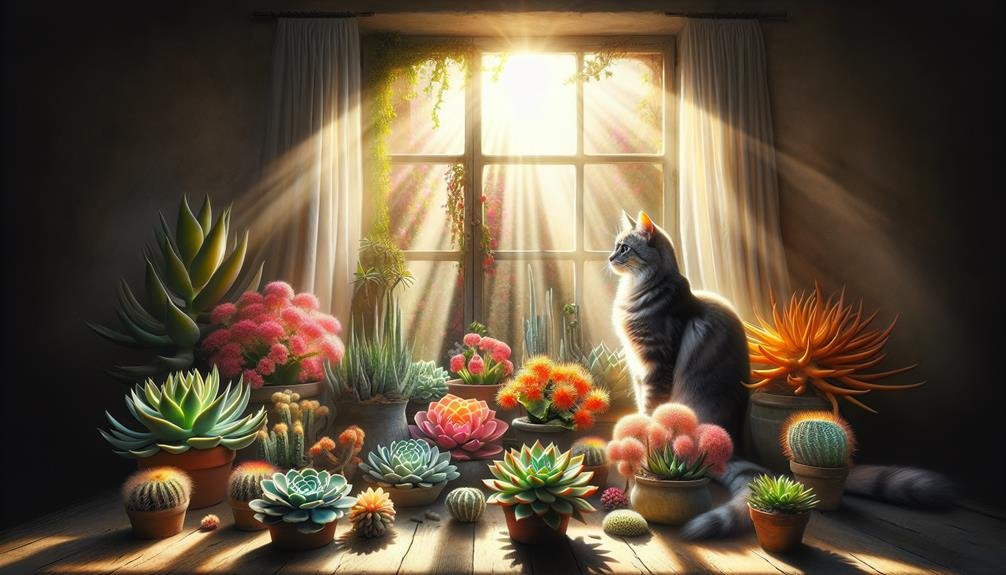
When it comes to your feline companions, you strive to ensure their safety and well-being. You secure cabinets, cover electrical outlets, but what about your indoor plants?
Succulents are all the rage, but did you know that some can be harmful to your cat? Understanding which succulents are toxic is vital, but it doesn't end there.
Stay tuned to discover practical tips and alternatives to create a cat-friendly environment while still enjoying your beloved succulents. Your cat's health may depend on it.
Toxicity of Common Succulents
When caring for succulents around your home, you must be aware of the potential toxicity they can pose to your feline companions. Some common succulents, such as aloe vera, jade plants, and snake plants, contain substances that can be harmful to cats if ingested. These plants are popular for their low maintenance, making them common choices for indoor gardens. However, it's crucial to ensure that they're placed in areas where your curious feline friends can't access them.
Aloe vera, known for its soothing properties for humans, can cause vomiting, diarrhea, and tremors in cats when consumed. Jade plants, with their attractive and dense foliage, contain compounds that may lead to symptoms like vomiting and depression in cats. Similarly, snake plants, recognized for their air-purifying abilities, can cause gastrointestinal issues and lethargy in felines.
To safeguard your cats from succulent toxicity, consider placing these plants in hanging containers or in areas that are inaccessible to your pets. Regularly inspect your succulents to ensure that no leaves or parts have been chewed on or damaged, which could potentially harm your beloved feline companions.
Symptoms of Succulent Poisoning
Curious about how succulent poisoning may affect your feline friends? If your cat has ingested a toxic succulent, you may notice a range of symptoms that can vary in severity. Common signs of succulent poisoning in cats include vomiting, diarrhea, drooling, lethargy, lack of appetite, and incoordination. These symptoms typically manifest within a few hours of ingestion but can sometimes take up to 24 hours to appear.
More severe cases of succulent poisoning can lead to tremors, seizures, difficulty breathing, and in extreme situations, even organ failure. If you observe any of these symptoms or suspect that your cat has ingested a toxic succulent, it's crucial to seek immediate veterinary care. Your veterinarian may recommend inducing vomiting, administering activated charcoal, or providing supportive care such as intravenous fluids depending on the severity of the poisoning.
Being aware of these symptoms and acting promptly can make a significant difference in your cat's recovery from succulent poisoning.
Safe Alternatives for Cat Owners
If your cat's safety is a top priority, exploring safe alternatives to toxic succulents is crucial. Opting for cat-friendly plants like spider plants, catnip, and wheatgrass can provide your feline friend with a safe environment to explore without the risk of poisoning.
Spider plants are non-toxic and safe for cats to be around, making them a popular choice for pet owners. Catnip is another excellent alternative that not only entertains your cat but is also safe for them to consume in moderate amounts.
Growing wheatgrass indoors can also give your cat a safe option for snacking, providing essential nutrients while keeping them away from harmful succulents. These safe alternatives not only ensure your cat's well-being but also add greenery to your home without the worry of toxicity.
Tips for Cat-Friendly Succulent Gardening
For cat-friendly succulent gardening, prioritize selecting non-toxic plant varieties that are safe for your feline companion to be around. Look for succulents such as Echeveria, Haworthia, and Burro's Tail, which are known to be safe for cats. When purchasing succulents, check the ASPCA website or consult with your local nursery to ensure you're choosing cat-friendly options.
Consider the placement of your succulents to prevent your cat from accessing them. Place tall succulents on high shelves or hanging planters out of your cat's reach. Alternatively, create a designated cat-free zone for your succulent garden to keep your plants safe and your cat happy.
Regularly inspect your succulents for any signs of damage or wilting. Remove any fallen leaves or debris that may attract your cat's curiosity. By maintaining your succulents, you can prevent your cat from ingesting any potentially harmful parts of the plant.
Emergency Measures for Poisoning Incidents
To ensure your cat's safety in case of poisoning incidents, familiarize yourself with emergency measures for addressing potential risks associated with toxic succulents.
If you suspect your cat has ingested a poisonous succulent, act quickly. First, remove your cat from the area to prevent further exposure. Check for any remaining plant parts in your cat's mouth and remove them carefully to prevent additional ingestion.
Next, contact your veterinarian or a pet poison helpline immediately for guidance. Be prepared to provide information about the succulent in question and your cat's symptoms. While waiting for help, don't attempt to induce vomiting without professional advice, as this can sometimes do more harm than good.
It's crucial to seek professional help promptly to ensure the best outcome for your cat. Remember, quick action is key in poisoning incidents, so stay calm and focused while taking these necessary steps to protect your furry friend from harm.
Conclusion
In conclusion, it's important to be aware of the potential dangers that certain succulents can pose to your feline friends. By knowing which plants are toxic and taking precautions to keep them out of reach, you can create a safe environment for your cats to enjoy.
Consider opting for cat-friendly alternatives in your garden and be prepared with emergency measures in case of poisoning incidents. Your furry companions will thank you for it!


