
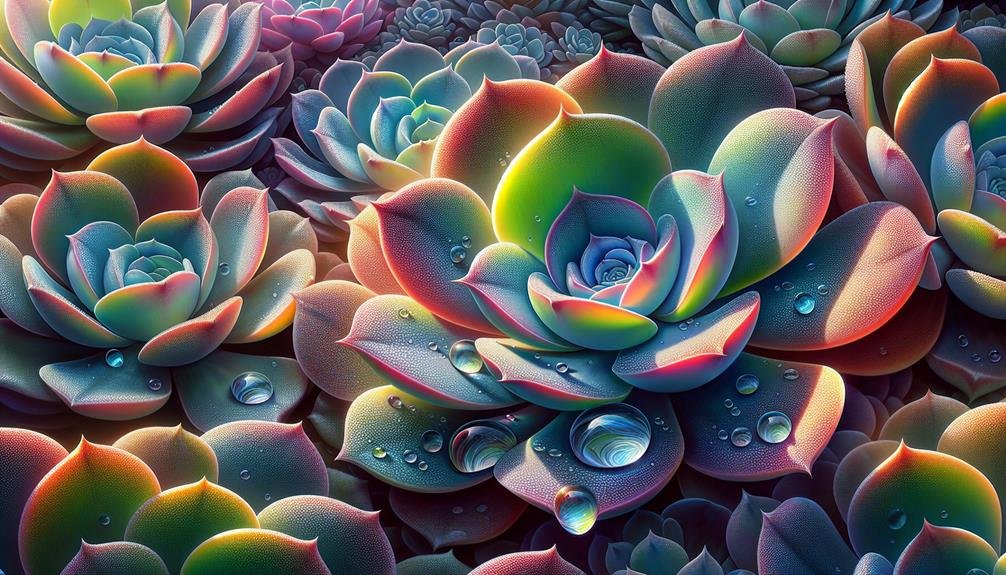
If you thought watering your succulents was as simple as a daily task, think again. Understanding how often to water your succulents is crucial for their optimal growth.
Overwatering can spell disaster, but under watering can be just as harmful. So, how do you strike the perfect balance to ensure your succulents thrive?
Let's explore the intricacies of succulent watering needs and find out the best practices to keep your plants happy and healthy.
Understanding Succulents Water Needs
Do succulents need frequent watering to thrive?
Succulents are unique plants that have adapted to survive in arid environments by storing water in their leaves, stems, or roots. Contrary to common belief, succulents don't require frequent watering to thrive. In fact, overwatering is one of the most common mistakes people make when caring for these plants. Succulents have a low water requirement due to their ability to store water efficiently, making them more resilient to drought conditions.
Instead of a strict watering schedule, it's crucial to observe your succulents and water them only when needed. Signs that your succulent needs water include wilting, shriveling, or leaves losing their firmness. When watering, ensure that the soil is completely dry before watering again to prevent root rot. Factors such as the type of succulent, the season, and the potting mix used can influence the watering frequency. By understanding your succulents' water needs and adjusting your watering practices accordingly, you can help them thrive and grow beautifully.
Factors Influencing Watering Frequency
Understanding the factors that influence watering frequency is essential for the proper care of succulents. Several key factors play a significant role in determining how often you should water your succulents.
One crucial factor is the type of succulent you're growing. Different succulent species have varying water requirements, with some needing more frequent watering than others.
The size of the pot and the type of soil used also impact how often you should water your succulents. Smaller pots dry out more quickly than larger ones, while well-draining soil allows water to pass through more easily, reducing the risk of overwatering.
Additionally, environmental factors such as temperature and humidity levels influence the rate at which water evaporates from the soil. During hot and dry periods, you may need to water your succulents more frequently to prevent dehydration.
Signs of Overwatering Succulents
Overwatering succulents can lead to detrimental effects on their growth and overall health. Signs that your succulent may be getting too much water include mushy or yellowing leaves, a soft or rotten stem, and an unpleasant smell emanating from the plant.
When overwatered, the roots of succulents can become waterlogged, leading to root rot and eventually the death of the plant. Additionally, overwatering can cause the leaves to swell and burst, further damaging the plant's ability to thrive.
Another indicator of overwatering is the presence of mold or algae on the soil surface. Excessive moisture creates a breeding ground for these unwanted organisms, which can outcompete the succulent for essential nutrients and oxygen. If you notice any of these signs, it's crucial to adjust your watering routine immediately to prevent further harm to your succulent.
Best Practices for Watering Succulents
To ensure the optimal growth of your succulents, it's essential to follow proper watering practices. When watering your succulents, it's best to water deeply but infrequently. This means allowing the water to fully penetrate the soil and reach the roots before watering again. Succulents prefer a thorough soaking followed by a period of drying out, as this mimics their natural environment where they endure periods of drought.
Another essential practice is to water the soil directly and avoid getting water on the leaves of the succulents. Wet leaves can lead to rot and fungal diseases, which can harm your plants. Additionally, it's crucial to use well-draining soil for your succulents to prevent water from pooling around the roots. This helps to avoid root rot, a common issue caused by overwatering.
Lastly, always check the moisture level of the soil before watering. Stick your finger into the soil about an inch deep – if it feels dry, it's time to water. By following these best practices, you can ensure your succulents thrive and grow beautifully.
Watering Schedule for Different Succulent Types
Maintaining a consistent watering schedule tailored to specific succulent types is crucial for their optimal growth and health. Different succulents have varying water requirements due to their diverse habitats and adaptations. For example, desert succulents like cacti need infrequent watering to mimic their natural environment, while tropical succulents such as aloe vera prefer more regular moisture. Observing your succulents' individual needs is key to preventing issues like overwatering or underwatering.
Succulents can be broadly categorized into three groups based on their watering needs: low, moderate, and high water requirement succulents. Low-water succulents like Haworthia and Lithops thrive on minimal moisture and should be watered sparingly. Moderate-water succulents such as Echeveria and Sedum benefit from a regular watering routine but still require good drainage to prevent root rot. High-water succulents like Aloe and Kalanchoe need more frequent watering but should be allowed to dry out between waterings to avoid waterlogged soil.
Conclusion
Remember, succulents thrive in dry conditions, so it's important not to overwater them.
By understanding their water needs, observing signs of overwatering, and following best practices for watering, you can ensure optimal growth for your succulents.
Remember to adjust your watering schedule based on the type of succulent you have, and always err on the side of underwatering rather than overwatering.
With proper care, your succulents will thrive and bring beauty to your space.


