
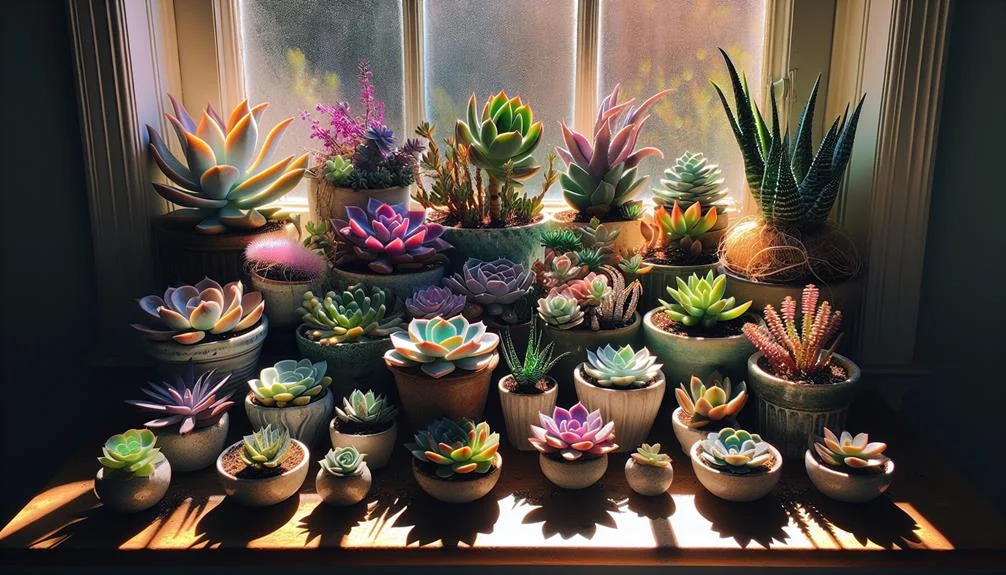
To grow healthy succulent plants, start by selecting the right soil for these special specimens.
But did you know that the key to thriving succulents goes beyond just the soil?
Understanding the intricacies of choosing suitable containers, providing optimal sunlight exposure, mastering the art of proper watering, and safeguarding against common pests and diseases are all crucial components in the flourishing succulent equation.
Stay tuned as we uncover the essential steps to ensure your succulents not only survive but truly thrive in your care.
Choosing the Right Soil
When selecting soil for your succulent plants, prioritize a well-draining mix to promote healthy root growth. Succulents dislike sitting in waterlogged soil, as it can lead to root rot and other issues. Look for a specialized cactus or succulent mix at your local garden center, or create your own by combining regular potting soil with perlite or coarse sand to improve drainage. This type of soil will allow excess water to flow through, preventing moisture from accumulating around the roots. Remember, succulents are adapted to arid conditions and thrive in soil that mimics their natural habitat.
Avoid using dense, moisture-retentive soils like garden soil or peat-based mixes, as they can trap water and cause problems for your succulents. Additionally, ensure the soil is well-aerated to promote oxygen flow to the roots. Proper soil selection is crucial for the overall health and vitality of your succulent plants, so take the time to choose the right mix for optimal growth.
Selecting Suitable Containers
To ensure the health of your succulent plants, selecting containers with proper drainage is essential. Succulents are prone to root rot if their roots sit in waterlogged soil for too long. When choosing containers, opt for ones that have drainage holes at the bottom. This allows excess water to escape, preventing water from pooling at the bottom of the pot and potentially harming your succulents.
Additionally, consider the size of the container. Succulents generally prefer snug spaces, so pick a pot that's just slightly larger than the plant's root ball. A smaller container can help prevent overwatering and promote healthier growth for your succulents.
Furthermore, the material of the container can also impact the health of your plants. Porous materials like terra cotta allow excess moisture to evaporate more easily than non-porous materials like plastic. Choose containers that are breathable to help regulate soil moisture levels and prevent issues like root rot. By selecting containers with proper drainage, size, and material, you can create a suitable environment for your succulent plants to thrive.
Providing Adequate Sunlight
Select a sunny spot for your succulent plants to thrive and ensure they receive adequate sunlight for optimal growth. Succulents love sunlight and need at least six hours of direct sunlight daily. Place them near a south or west-facing window where they can soak up the sun's rays.
If you're growing succulents outdoors, choose a location with full sun exposure. Be mindful of intense afternoon sun, especially in hot climates, as it can scorch the leaves. If you notice your succulents stretching or leaning towards the light, they may not be getting enough sunlight. Rotate the pots regularly to promote even growth.
Remember that different succulent species have varying sunlight requirements, so research your specific plants to provide the right amount of light. Adequate sunlight not only encourages vibrant colors but also helps prevent issues like etiolation, a condition where succulents become leggy and weak due to insufficient light.
Watering Succulents Properly
To ensure the health and vitality of your succulent plants, mastering the proper watering techniques is essential. Succulents are adapted to survive in arid conditions by storing water in their leaves, stems, or roots. When watering your succulents, the key is to mimic their natural environment. It's crucial to water deeply but infrequently. Allow the soil to dry out completely between waterings to prevent root rot, a common issue with succulents.
When watering, make sure to drench the soil thoroughly, allowing excess water to drain out of the pot's bottom. Avoid letting your succulents sit in standing water, as this can lead to waterlogging and root rot. In addition to the frequency of watering, the type of soil used also plays a vital role. Well-draining soil is essential for succulents to thrive. A mix specifically formulated for cacti and succulents is ideal.
Preventing Common Pests and Diseases
Prevent pests and diseases that can harm your succulent plants by implementing proper care and maintenance practices. Start by regularly inspecting your plants for any signs of pests such as mealybugs, spider mites, or aphids. If you notice any pests, isolate the affected plant to prevent the infestation from spreading.
To deter pests, you can use natural remedies like neem oil spray or insecticidal soap. Additionally, ensure your succulents are planted in well-draining soil to prevent root rot, a common disease caused by overwatering. Avoid watering your plants from overhead, as wet leaves can attract fungal diseases. Instead, water the soil directly at the base of the plant.
During repotting, remove any rotted or damaged roots to maintain plant health. Lastly, provide adequate air circulation around your succulents to prevent humidity build-up, which can lead to fungal infections. By following these preventative measures, you can keep your succulent plants healthy and thriving.
Conclusion
Now that you know the basics of growing healthy succulent plants, you can create a thriving garden filled with these beautiful and low-maintenance plants.
Remember to choose the right soil, containers, provide enough sunlight, water properly, and protect them from pests and diseases.
With a little care and attention, your succulents will flourish and bring beauty to your home or garden.
Happy gardening!


