
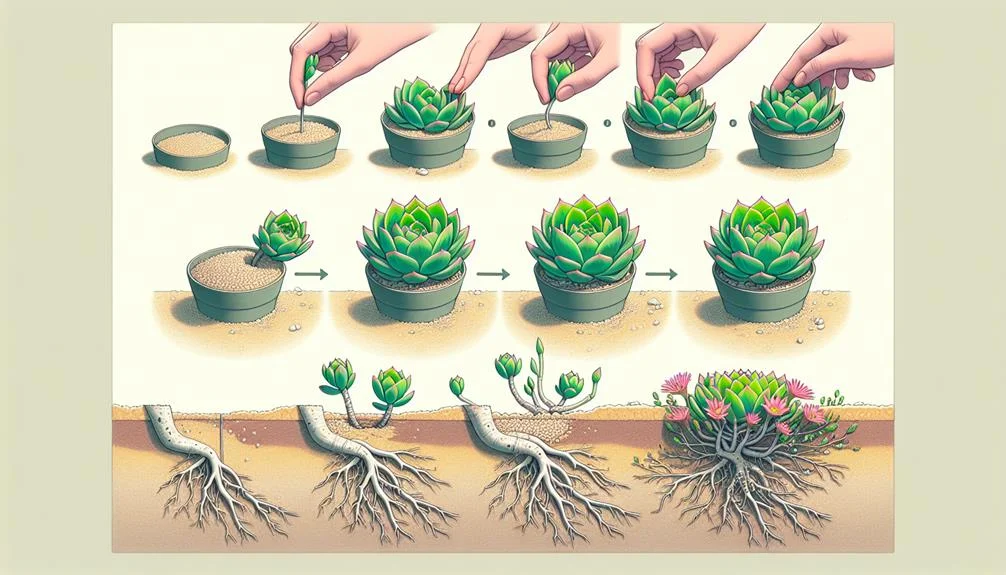
When it comes to growing succulents in sand, choosing the right succulents is crucial. But do you know what specific types thrive best in this environment? Understanding the needs of these plants can make all the difference in their growth and overall health.
So, let's explore how succulents adapt and flourish in sandy soil, step by step.
Choosing the Right Succulents
When selecting succulents to grow in a sandy environment, prioritize those that thrive in well-draining soil. Succulents like cacti, sedum, and echeveria are excellent choices as they can adapt well to sandy conditions. These plants have shallow roots that prefer soil that dries out quickly, making sandy soil an ideal medium for their growth. Look for succulents labeled as drought-resistant or those that are native to arid regions, as they're more likely to thrive in sandy soil.
Consider the amount of sunlight your succulents will receive in your sandy garden. Most succulents prefer bright, indirect light, but some can also thrive in full sun. Ensure you choose succulents that are suitable for the light conditions your garden provides. Additionally, pay attention to the mature size of the succulents you select, as some varieties may outgrow the space in your sandy garden.
Preparing the Sandy Soil
To enhance the growth of your succulents in sandy soil, ensure proper preparation of the substrate. Start by selecting a well-draining sandy soil mix or prepare one by combining coarse sand with potting soil in a 1:1 ratio. This mixture helps prevent waterlogging, which can lead to root rot in succulents. Before planting, amend the sandy soil with organic matter such as compost or peat moss to improve its nutrient content. Mix the organic matter thoroughly into the soil to ensure even distribution of nutrients.
Next, ensure the sandy soil is free of debris, rocks, or clumps that could hinder root growth. Break up any large clumps and remove any rocks to create a smooth planting surface. Additionally, consider adding a layer of gravel at the bottom of the planting container to further enhance drainage. Once the sandy soil is prepared, you're ready to move on to the next step of planting your succulents.
Planting Succulents in Sand
Interested in creating a thriving succulent garden in sandy soil? Planting succulents in sand is a straightforward process that can yield beautiful results.
To begin, choose succulents that thrive in well-draining soil, as sand provides excellent drainage. When planting, dig a hole slightly larger than the plant's root ball. Gently loosen the roots and place the succulent in the hole. Fill the gaps with sand, ensuring the plant is stable and upright.
Make sure not to bury the succulent too deeply; the top of the root ball should be level with the soil surface or slightly above. After planting, gently press the sand around the base of the plant to secure it in place.
Consider the spacing between succulents to allow for proper airflow and growth. Once all your succulents are planted, give them a good watering to help them settle into their new sandy home.
Now that your succulents are in place, the next step is to learn about proper watering techniques to keep them thriving.
Watering Techniques for Succulents
For healthy succulents growing in sandy soil, mastering proper watering techniques is essential. Succulents are adapted to arid conditions, so they don't require frequent watering. When watering your succulents, ensure that the soil is completely dry before adding more water.
Overwatering can lead to root rot, a common issue that can harm your succulents. To prevent overwatering, water your succulents sparingly but thoroughly. A good rule of thumb is to water them only when the soil is dry to the touch.
When watering, make sure to water the soil directly and avoid getting water on the leaves, as this can cause rot or fungal diseases. Using a watering can with a narrow spout can help target the soil and prevent water from pooling on the leaves.
Caring for Succulents in Sand
When caring for succulents in sand, ensure proper drainage to prevent waterlogged soil. Succulents thrive in well-draining soil, which is crucial for their health. To care for succulents in sand effectively, water sparingly but deeply. Allow the soil to dry out completely between watering sessions to prevent root rot. Succulents are drought-tolerant plants, so it's better to underwater than overwater them.
During hot weather, water your succulents more frequently, but always adjust based on the specific needs of your plants. Fertilize your succulents sparingly, as sand provides fewer nutrients compared to traditional soil. Use a diluted, balanced fertilizer once a month during the growing season.
Keep an eye out for pests like aphids or mealybugs that might target your succulents. If infestations occur, treat them promptly to prevent damage. By following these care tips, your succulents will flourish in their sandy environment.
Conclusion
Now that you know how to grow succulents in sand, you can enjoy these low-maintenance plants in your home or garden.
Remember to choose the right succulents, prepare the sandy soil properly, plant them correctly, water them sparingly, and care for them with regular maintenance.
With these simple steps, your succulents will thrive in their sandy environment and bring a touch of natural beauty to your space.
Enjoy watching your succulents grow and flourish!


