
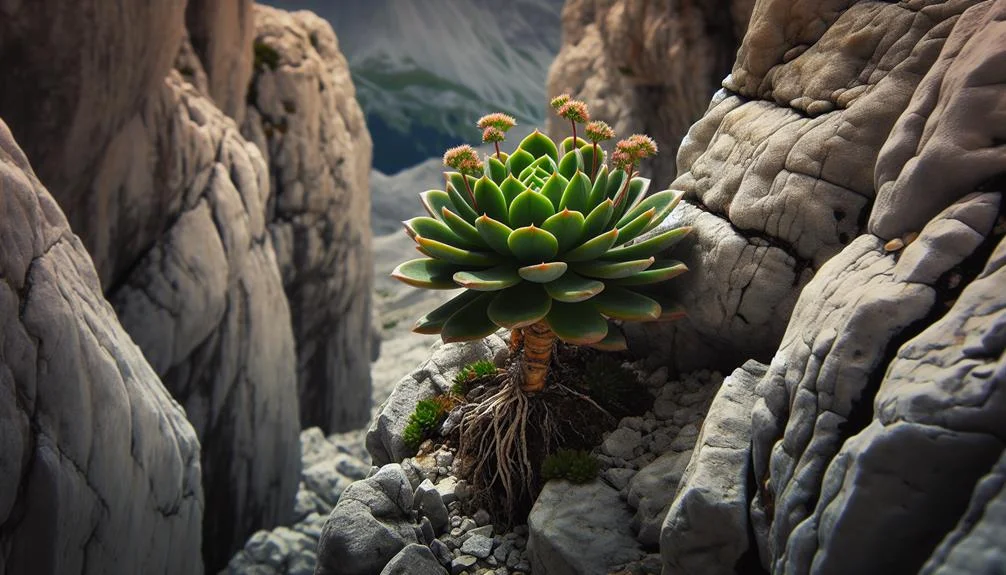
You might have noticed how some succulents seem to effortlessly thrive in rocky environments, their vibrant colors contrasting beautifully with the rough textures of the stones. But have you ever wondered how they manage to do so?
Understanding the intricate balance of factors that allow succulents to not just survive but actually flourish in rocky terrain can provide valuable insights into cultivating these hardy plants in your own garden.
Let's explore the fascinating world of succulents and rocks, unraveling the secrets of their successful coexistence.
Selecting the Right Succulents
When selecting succulents to grow in rocks, consider their size and water requirements. Opt for smaller succulents like Echeverias or Sedums, as they fit well in rock crevices and don't outgrow the space quickly. These plants have low water needs, making them ideal for rocky environments where soil retains less moisture.
Ensure you choose varieties that can thrive in your local climate conditions, whether it's a hot, dry desert or a more temperate area. Popular choices for rock gardens include Sempervivums, also known as hens and chicks, and various types of Crassula.
Before purchasing your succulents, research their specific care requirements to ensure they'll flourish in your chosen rocky setting. Some succulents prefer more sunlight, while others thrive in partial shade. Consider the overall aesthetic you want to achieve in your rock garden and select succulents with colors and textures that complement each other.
Preparing the Rocky Environment
To ensure your succulents thrive in rocks, the first step is to prepare the rocky environment for optimal growth conditions. Begin by clearing the area of any debris or existing plants to make space for your succulents. It's crucial to choose a location that receives adequate sunlight, as most succulents require plenty of light to grow successfully.
Once you've identified the right spot, assess the drainage of the area. Rocks can provide excellent drainage, but it's essential to ensure there are no low-lying areas where water could pool and potentially rot the roots of your plants.
Next, consider the type of rocks you'll be using. Opt for porous rocks like lava rocks or pumice that allow for airflow and water drainage. Before placing the rocks, amend the soil with a succulent-friendly mix to provide nutrients for your plants. Arrange the rocks in a way that creates pockets of soil where you can plant your succulents.
Planting Succulents in Rocks
Prepare your succulents for planting in rocks by selecting healthy specimens with well-established roots. Once you have chosen your plants, it's time to carefully plant them in the rocky environment. Begin by creating a small hole in the rock or soil where you want to place your succulent. Gently loosen the roots of the plant to help it adjust to its new home.
Next, position the succulent in the hole and lightly pack the surrounding soil or rocks to hold it in place. Be sure not to bury the succulent too deeply; its roots should be just below the surface. Press the soil or rocks around the base of the plant to provide stability.
Water the newly planted succulent sparingly, allowing the roots to establish themselves in the rocky environment. Avoid overwatering, as succulents are prone to root rot in excessively moist conditions. Place your succulent in a sunny spot, as they thrive in bright light.
With proper care, your succulent will adapt and grow beautifully in its rocky home.
Providing Adequate Water and Sunlight
For healthy growth, ensure your succulents receive adequate water and sunlight. Succulents thrive in bright, indirect sunlight. Place your rocks with succulents in a spot that receives at least 6 hours of sunlight per day. If you notice your succulents stretching or leaning towards the light source, rotate them regularly to promote even growth.
When it comes to watering succulents in rocks, less is more. Water sparingly, allowing the soil to dry out completely between waterings. Overwatering can lead to root rot, so it's crucial to ensure proper drainage in the rock crevices. Consider using a spray bottle to water your succulents gently, avoiding soaking the leaves.
During the hotter months, your succulents may need more frequent watering. Keep an eye on the soil's moisture levels and adjust your watering schedule accordingly. If you're unsure whether to water, it's better to wait to prevent overwatering. By providing the right balance of water and sunlight, your succulents will thrive in their rocky environment.
Maintaining and Troubleshooting Issues
Ensure your succulents remain healthy by promptly addressing any maintenance issues or problems that may arise in their rocky environment. Keeping an eye on your succulents is crucial to catch any issues early on.
If you notice yellowing or mushy leaves, it could be a sign of overwatering. In this case, reduce watering frequency and ensure proper drainage in the rocky substrate. On the other hand, wrinkled or shriveled leaves indicate underwatering. Increase your watering slightly, making sure not to drench the soil.
Pests like aphids or mealybugs can also pose a threat to your succulents. To combat these, gently wipe the affected areas with a cloth soaked in mild soapy water. Additionally, if your succulents aren't thriving despite adequate care, consider repotting them into fresh soil to revitalize their growth.
Conclusion
Overall, growing succulents in rocks can be a rewarding and visually appealing project.
By selecting the right succulents, preparing the rocky environment, planting them correctly, and providing adequate care, you can create a unique and beautiful display in your garden or home.
Remember to water and provide sunlight as needed, and troubleshoot any issues that may arise to ensure your succulents thrive and grow successfully in their rocky environment.


