
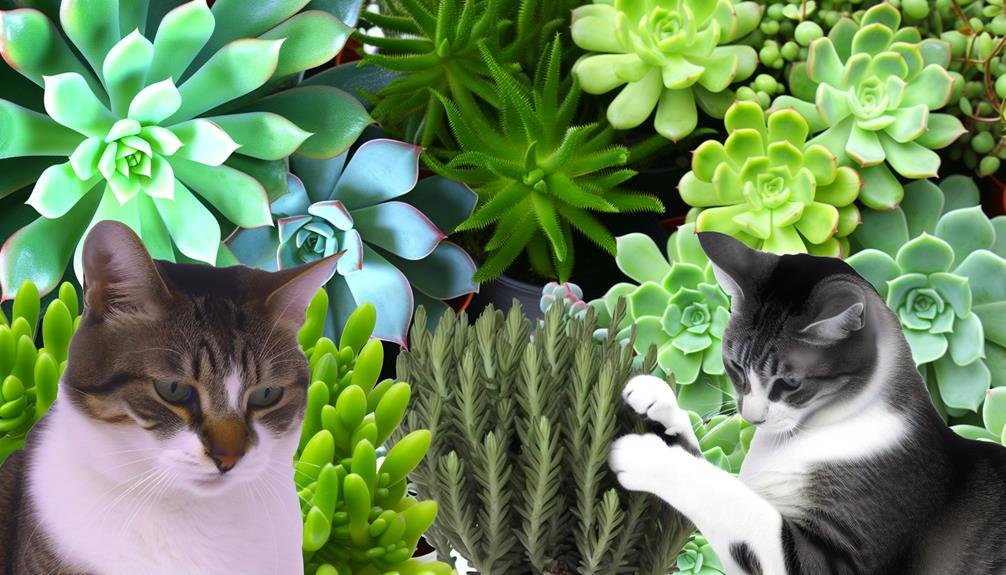
When it comes to keeping your feline friend safe, be cautious of jade plants, aloe vera, and snake plants, as they are poisonous to cats due to toxic substances. Jade plants may cause vomiting, depression, and incoordination, while aloe vera can lead to diarrhea, lethargy, and tremors. Snake plants are known to trigger gastrointestinal upset and excessive drooling. Look out for symptoms like vomiting, diarrhea, lethargy, and behavioral changes, and ensure immediate veterinary care if poisoning is suspected. Tips on safe succulent alternatives await to guide you further in protecting your cat's well-being.
Common Toxic Succulents for Cats
If you have cats, be cautious of keeping common toxic succulents in your home. Some popular succulents that can be harmful to your feline friends include jade plants, aloe vera, and snake plants. These plants contain substances that, if ingested by your cat, can lead to symptoms of poisoning.
Jade plants, known for their thick, glossy leaves, contain a compound that can cause vomiting, depression, and incoordination in cats. Aloe vera, often used for its healing properties, can be toxic to cats and result in symptoms like diarrhea, lethargy, and tremors. Snake plants, with their striking upright leaves, contain toxins that may cause gastrointestinal upset and excessive drooling in cats.
To ensure the safety of your pets, it's crucial to keep these toxic succulents out of reach or opt for cat-friendly alternatives in your home. Being aware of the potential dangers can help you create a secure environment for both your cats and your beloved succulents.
Symptoms of Succulent Poisoning in Cats
Beware of the signs that your cat may exhibit if they've been poisoned by toxic succulents. Symptoms of succulent poisoning in cats can vary depending on the specific plant ingested and the amount consumed. Common signs to watch out for include vomiting, diarrhea, drooling, lethargy, lack of appetite, and changes in behavior.
Your cat may also show signs of abdominal pain, such as vocalization or reluctance to be touched in the stomach area. In severe cases, tremors, seizures, difficulty breathing, and even collapse can occur. If you notice any of these symptoms or suspect that your cat has ingested a toxic succulent, it's crucial to seek immediate veterinary attention.
Prompt treatment can help mitigate the effects of poisoning and improve the chances of a successful recovery. Remember to provide your veterinarian with information about the plant ingested to aid in the treatment process.
How to Keep Cats Safe
To ensure the safety of your feline companions, it's important to take proactive measures in preventing their exposure to poisonous succulents. Start by educating yourself on the types of succulents that are toxic to cats. Keep these plants out of reach by placing them in areas that your cats can't access, such as high shelves or rooms they don't frequent.
Regularly inspect your indoor and outdoor spaces to ensure there are no toxic succulents within your cat's reach.
Consider creating a dedicated cat-friendly area with non-toxic plants for your furry friends to enjoy. Provide plenty of enriching toys and activities to keep your cats entertained and less likely to investigate potentially harmful plants.
If you suspect your cat has ingested a toxic succulent, contact your veterinarian immediately. Keep their contact information readily available in case of emergencies.
Cat-Friendly Alternatives to Toxic Succulents
Consider replacing toxic succulents with cat-friendly alternatives to ensure the safety of your feline friends. Opt for plants like spider plants, which are safe for cats and also easy to care for. Spider plants are non-toxic and can provide a playful distraction for your curious kitty with their dangling leaves.
Another excellent choice is the Boston fern, known for its air-purifying qualities and being non-toxic to cats. These ferns thrive in indirect light and high humidity, making them suitable for various indoor environments.
For those looking for a succulent-like alternative, the friendship plant is a great option. This plant has similar fleshy leaves to succulents but is safe for cats. Friendship plants can be grown both indoors and outdoors, adding a touch of greenery without posing a threat to your furry companions.
Emergency Actions for Poisoning Incidents
To ensure you're prepared in case of poisoning incidents involving your cat and toxic succulents, it's important to be aware of emergency actions that can be taken promptly. If you suspect your cat has ingested a poisonous succulent, the first step is to contact your veterinarian immediately. Describe the plant in question and any symptoms your cat is displaying. If instructed by the vet, you may need to induce vomiting, but never do this without professional guidance as it can be harmful in certain situations.
While waiting for veterinary assistance, try to keep your cat calm and prevent further ingestion of the plant. Make sure to remove any remnants of the succulent from your cat's mouth to prevent continued absorption of toxins. It's crucial to act swiftly in these situations to minimize harm to your feline companion. Remember, every minute counts in a potential poisoning emergency, so prompt action is key to ensuring the best possible outcome for your cat.
Tips for Succulent Placement in Homes
For optimal succulent care and safety, ensure you place them in well-lit areas away from your cat's reach. Cats are naturally curious creatures and may nibble on plants within their vicinity, potentially leading to health issues if the succulents are toxic. Choose elevated surfaces like shelves or hanging planters to keep your succulents out of reach. This not only protects your cat but also prevents accidental damage to the plants.
Additionally, make sure your succulents receive adequate sunlight for proper growth. Most succulents thrive in bright, indirect light, so placing them near a sunny window is ideal. However, be cautious of intense sunlight as it can scorch the leaves of some succulent varieties.
Consider the overall aesthetics of your space when arranging succulents. Grouping different types of succulents together can create visually appealing arrangements. Remember to leave enough space between plants to allow for airflow and prevent overcrowding, which can lead to issues like mold or pests. By following these placement tips, you can enjoy your succulents while keeping your feline friend safe.
Consulting a Vet for Pet Safety
Ensure your cat's well-being by consulting a veterinarian regarding the safety of your succulents. Your vet can provide valuable insights into which succulents are safe to have around your feline friend and which ones to avoid. They can also advise you on the signs of poisoning to look out for in case your cat ingests any toxic plants. By seeking professional guidance, you can create a safe environment for your pet while enjoying the beauty of your succulent collection.
Vets have the expertise to identify potential risks associated with specific succulent varieties and can recommend pet-friendly alternatives. They may suggest placing toxic succulents out of your cat's reach or opting for non-toxic options altogether. Additionally, your vet can offer tips on how to train your cat to avoid certain plants or provide guidance on creating barriers to prevent access.
Ultimately, consulting a vet is a proactive step in safeguarding your cat's health and well-being. Their knowledge and guidance can help you make informed decisions to keep your pet safe and happy in your home.
Frequently Asked Questions
Are There Any Succulents That Are Safe for Cats to Ingest?
Yes, there are safe succulents for cats to nibble on. Plants like spider plants, Boston ferns, and cat grass are cat-friendly options. These non-toxic succulents provide a safe snacking alternative for your feline friend.
It's important to ensure your cat has access to these plants if they enjoy exploring greenery. By offering these safe options, you can provide enrichment for your cat while keeping them away from potentially harmful succulents.
Can Succulent Poisoning in Cats Be Treated at Home, or Is a Vet Visit Always Necessary?
For succulent poisoning in cats, it's crucial to consult a vet promptly. While some mild cases might be manageable at home with guidance, severe poisoning requires professional intervention.

Symptoms vary in severity and can escalate quickly. Acting swiftly by seeking veterinary care ensures proper diagnosis and treatment tailored to your cat's needs.
It's better to err on the side of caution and prioritize your furry friend's well-being by seeking professional help when in doubt.
How Quickly Do Symptoms of Succulent Poisoning in Cats Typically Manifest After Ingestion?
Symptoms of succulent poisoning in cats typically manifest within a few hours to a day after ingestion.
You may notice signs such as vomiting, diarrhea, lethargy, drooling, and changes in appetite or behavior.
In severe cases, cats can experience tremors, seizures, or difficulty breathing.
It's crucial to seek veterinary care promptly if you suspect your cat has ingested a toxic succulent to prevent complications and ensure proper treatment.
Are There Any Natural Remedies or Treatments That Can Help Alleviate Symptoms of Succulent Poisoning in Cats?
If your cat shows signs of succulent poisoning, it's crucial to seek immediate veterinary care. Professional treatment is the most effective way to address symptoms and provide the necessary care.
Natural remedies or treatments may not be safe or sufficient in addressing poisoning in cats. Always consult a veterinarian for guidance on the best course of action to alleviate symptoms and ensure your cat's well-being.
Are There Any Long-Term Effects or Complications Associated With Succulent Poisoning in Cats?
Long-term effects of succulent poisoning in cats can vary. Complications may arise based on the type of succulent ingested, the amount consumed, and the cat's overall health. Some succulents can cause kidney damage, liver issues, or gastrointestinal problems that may lead to chronic conditions if not treated promptly.
Monitoring your cat's health post-poisoning is crucial to address any lingering effects and prevent further complications. Regular veterinary check-ups are recommended for ongoing care.
Conclusion
In conclusion, being aware of the common toxic succulents for cats is essential. Recognizing symptoms of succulent poisoning and taking preventive measures are crucial for keeping your feline companions safe.
By opting for cat-friendly alternatives and being prepared with emergency actions in case of poisoning incidents, you can ensure a safe environment for your pets.
Consultation with a vet for guidance on pet safety is always recommended for a proactive approach to keeping your cats out of harm's way.


