
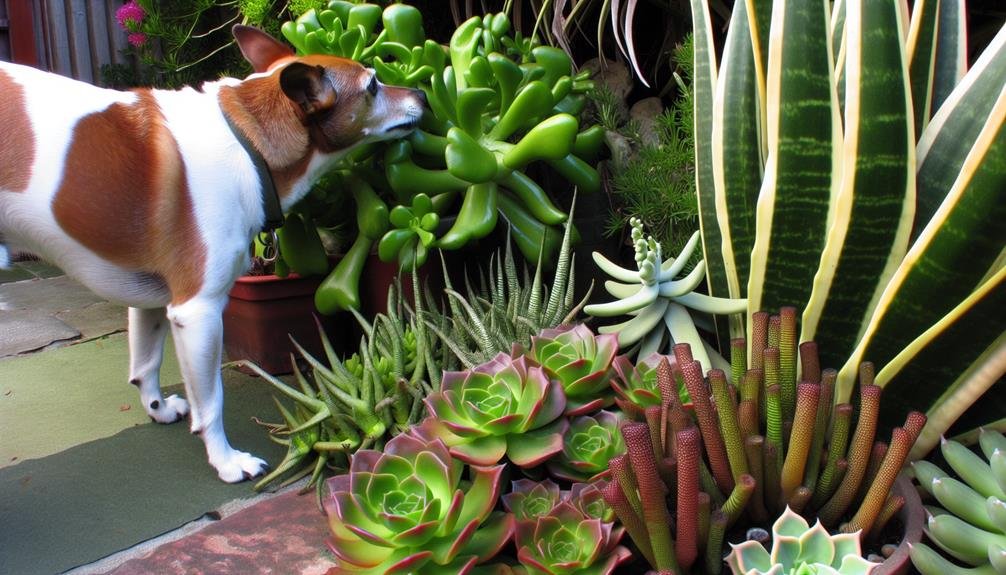
Succulents like Jade Plants, Aloe Vera, and Kalanchoe can be harmful to your dog if ingested, causing symptoms such as vomiting, lethargy, and gastrointestinal upset. Jade Plants contain bufadienolides that lead to issues like slowed heart rate, while Aloe Vera contains saponins and anthraquinones, resulting in tremors and gastrointestinal upset in dogs. Kalanchoe poses a danger due to cardiac glycosides that can cause abnormal heart rhythms and even prove fatal. To keep your pet safe, it's crucial to be aware of which succulents are toxic and take preventive measures. Understanding the risks associated with specific plants can protect your furry friend from potential harm.
Common Toxic Succulents
If your dog ingests certain succulents, it can be toxic and harmful to their health. Some common toxic succulents that pet owners should be cautious of include Jade Plants, Aloe Vera, and Kalanchoe.
Jade Plants contain a substance called bufadienolides, which can cause vomiting, depression, and a slowed heart rate in dogs. Aloe Vera, known for its soothing properties, can lead to gastrointestinal upset and tremors if consumed by dogs. Kalanchoe, another popular succulent, contains cardiac glycosides that can cause abnormal heart rhythms and even be fatal to dogs if ingested in large quantities.
To ensure the safety of your canine companion, it's crucial to be aware of the types of succulents you have in your home and garden. Keep these toxic succulents out of reach and consider planting pet-friendly alternatives like Haworthia and Echeveria. If you suspect your dog has ingested a toxic succulent, contact your veterinarian immediately for guidance on the necessary steps to protect your pet's health.
Symptoms of Poisoning in Dogs
Identifying the symptoms of poisoning in dogs is vital for prompt intervention and treatment. If your dog has ingested a toxic succulent, you may notice signs such as vomiting, diarrhea, drooling, lethargy, and loss of appetite. These initial symptoms can progress to more severe effects like tremors, seizures, difficulty breathing, and even organ failure. Keep a close eye on your pet for any unusual behavior or physical changes, especially after exposure to potentially harmful plants.
In cases of succulent poisoning, immediate action is crucial. Contact your veterinarian or an animal poison control hotline for guidance. Provide them with details such as the type and amount of plant ingested, as well as your dog's weight and current symptoms. Don't attempt home remedies without professional advice, as some interventions could worsen the situation. Remember, early detection and proper treatment significantly increase the chances of a positive outcome for your furry friend. Be vigilant and seek help if you suspect your dog has been poisoned by a toxic succulent.
Aloe Vera
When considering succulents poisonous to dogs, Aloe Vera stands out as a common household plant that can pose a risk to your furry companion. Aloe Vera, known for its soothing properties for humans, contains saponins and anthraquinones that are toxic to dogs when ingested in large amounts. These compounds can cause symptoms such as vomiting, diarrhea, lethargy, tremors, and changes in urine color if your dog consumes parts of the Aloe Vera plant.
While the toxicity level of Aloe Vera is considered mild to moderate in dogs, it's essential to keep this plant out of your pet's reach to prevent any potential harm. If you suspect your dog has ingested Aloe Vera or is showing signs of poisoning, contact your veterinarian immediately for guidance on the best course of action.
Ensuring a safe environment by avoiding toxic plants like Aloe Vera is crucial in maintaining your dog's well-being.
Jade Plant
The toxicity of Jade Plant to dogs is a significant concern for pet owners due to its harmful effects when ingested. Jade Plants, also known as Crassula ovata or Money Trees, contain a substance called bufadienolide that's toxic to dogs. If your dog consumes any part of the Jade Plant, it can lead to symptoms such as vomiting, lethargy, incoordination, and in severe cases, even heart arrhythmias.
It's crucial to keep Jade Plants out of reach of your furry friends to avoid accidental ingestion. If you suspect that your dog has ingested Jade Plant or is showing any signs of poisoning, contact your veterinarian immediately. Treatment may involve inducing vomiting, administering activated charcoal to absorb the toxins, providing supportive care like intravenous fluids, and monitoring your dog closely for any complications.
Kalanchoe
If your dog is exposed to Kalanchoe, also known as Mother of Thousands, be aware that this plant is toxic and can cause harmful effects if ingested. Kalanchoe contains bufadienolides, a type of cardiac glycoside that can lead to symptoms such as vomiting, diarrhea, abnormal heart rhythm, and in severe cases, even death. If you suspect your dog has ingested Kalanchoe, it's crucial to seek immediate veterinary attention.
The toxic effects of Kalanchoe can vary depending on the amount ingested and the size of the dog. Even small ingestions can lead to adverse reactions, so it's essential to keep this plant out of reach of your pets. Symptoms of Kalanchoe poisoning may not appear immediately, so monitoring your dog closely after exposure is vital.
To prevent accidental ingestion, consider choosing pet-safe alternatives to Kalanchoe in your indoor or outdoor garden. Being proactive in safeguarding your dog from potentially harmful plants like Kalanchoe is a responsible way to ensure their well-being.
Sago Palm
Consider the risks associated with having a Sago Palm around your dog, as this plant is highly toxic and can pose serious health threats if ingested.
The Sago Palm, scientifically known as Cycas revoluta, contains toxins such as cycasin and cycad that affect various organs in dogs, including the liver, kidneys, and central nervous system. Even small ingestions of Sago Palm can lead to symptoms like vomiting, diarrhea, lethargy, jaundice, and in severe cases, liver failure or even death.
The seeds, leaves, and roots of the Sago Palm are all toxic to dogs, making it crucial to keep these plants out of reach in your home and garden. If you suspect your dog has ingested any part of a Sago Palm, seek immediate veterinary care.
Prevention is key when it comes to protecting your furry friend from the dangers of this beautiful yet hazardous plant.
Euphorbia
Be cautious when introducing Euphorbia plants into your home, as they can be harmful to your furry companion. Euphorbia, commonly known as spurge, encompasses a vast genus of succulent plants that can pose a threat to your dog if ingested.
These plants contain a milky sap that can cause skin irritation and gastrointestinal issues in dogs. If your pet comes into contact with Euphorbia sap, it may experience symptoms like redness, swelling, and itching on the skin. Ingesting any part of the Euphorbia plant can lead to more severe symptoms such as vomiting, diarrhea, drooling, and in some cases, even more serious complications.
It's essential to keep Euphorbia plants out of reach of your dog and monitor them closely when outdoors to prevent accidental ingestion. If you suspect your dog has ingested any part of a Euphorbia plant, contact your veterinarian immediately for guidance on the necessary steps to ensure your pet's health and safety.
String of Pearls
String of Pearls succulents are known for their unique trailing stems adorned with round, bead-like leaves. These quirky plants belong to the Senecio genus and are popular for their cascading growth habit, making them a favorite for hanging baskets or elevated planters. While their charming appearance adds a touch of whimsy to any space, it's essential to be aware that String of Pearls can be toxic to dogs if ingested.
The toxicity of String of Pearls stems from its composition of certain compounds that can cause gastrointestinal upset in dogs. Symptoms of poisoning may include vomiting, diarrhea, drooling, and lethargy. In severe cases, ingestion of this plant can lead to more serious complications and would require immediate veterinary attention.
To ensure the safety of your furry companions, it's best to place String of Pearls out of reach or opt for pet-friendly alternatives. Being mindful of the plants you have in your home and garden can prevent accidental ingestion and keep your dogs healthy and happy.
Donkeys Tail
If you're looking to expand your knowledge of succulents that can pose a risk to your furry friends, the next plant to highlight is Donkey's Tail. This trailing succulent, also known as Sedum morganianum, features stems adorned with plump, teardrop-shaped leaves that give it a distinctive appearance. While this plant adds a charming touch to your indoor or outdoor garden, it's important to be aware of its potential toxicity to dogs.

Donkey's Tail contains a substance that can cause gastrointestinal upset in dogs if ingested. Symptoms may include vomiting, diarrhea, and drooling. In some cases, more severe reactions such as lethargy or tremors can occur. If you suspect your dog has eaten any part of the Donkey's Tail plant, it's crucial to contact your veterinarian for guidance immediately.
To keep your canine companion safe, consider placing Donkey's Tail out of reach or opting for pet-friendly succulent varieties. Being informed about the potential risks associated with certain plants like Donkey's Tail can help you create a pet-friendly environment in your home.
Frequently Asked Questions
Can Succulents That Are Not Listed in the Article Still Be Toxic to Dogs?
Yes, succulents not mentioned in the article can still be toxic to dogs. Some common houseplants and outdoor plants may pose a danger to your furry friend. It's important to research each plant before introducing it into your home or garden.
Symptoms of plant toxicity in dogs can range from mild gastrointestinal upset to more severe issues. When in doubt, consult with a veterinarian to ensure your pet's safety around plants.
Are There Any Succulents That Are Safe for Dogs to Be Around?
When it comes to succulents safe for dogs, there are several options to consider. Plants like Haworthia, Echeveria, and Christmas Cactus are generally non-toxic to dogs.
These succulents can add a touch of greenery to your space without posing a threat to your furry friend. It's always wise to double-check the specific species of succulent you have to ensure its safety around pets.
How Quickly Should I Seek Veterinary Help if My Dog Ingests a Toxic Succulent?
If your dog ingests a toxic succulent, it's crucial to act swiftly. Immediate veterinary attention is necessary. Don't wait for symptoms to appear; contact your vet right away.
Time is of the essence in such situations. Veterinary professionals can provide the necessary treatment to counteract the effects of the toxins. Delaying treatment can worsen the situation.
Always err on the side of caution and seek help promptly if you suspect plant poisoning.
Are There Any Household Products or Medications That Can Be Used to Treat Succulent Poisoning in Dogs?
If your dog ingests a toxic succulent, don't attempt home remedies. Seek veterinary help immediately.
Household products or medications aren't recommended for treating succulent poisoning in dogs. Professional care is crucial in handling plant toxicity cases.
Quick action can make a difference in your pet's recovery. Trust the expertise of a veterinarian to provide the appropriate treatment for succulent poisoning.
It's always better to be safe than sorry when it comes to your furry friend's health.
Can Succulent Poisoning in Dogs Have Long-Term Effects on Their Health?
Succulent poisoning in dogs can indeed have long-term effects on their health. Depending on the type of succulent ingested, the severity of symptoms, and the promptness of treatment, dogs may experience lingering health issues.
These can range from digestive problems to organ damage. It's crucial to seek veterinary care immediately if you suspect your dog has been poisoned by a succulent to mitigate potential long-term health consequences.
Conclusion
In conclusion, it's important for dog owners to be aware of the potential dangers of certain succulent plants that can be toxic to their pets. Common toxic succulents include Aloe Vera, Jade Plant, Kalanchoe, Sago Palm, Euphorbia, String of Pearls, and Donkey's Tail. These plants can cause symptoms of poisoning in dogs if ingested. By being informed and taking precautions to keep these plants out of reach, pet owners can help ensure the safety and well-being of their furry companions.
This awareness can prevent accidental ingestion and potential harm to dogs, leading to a healthier and happier living environment for both pets and their owners.


