
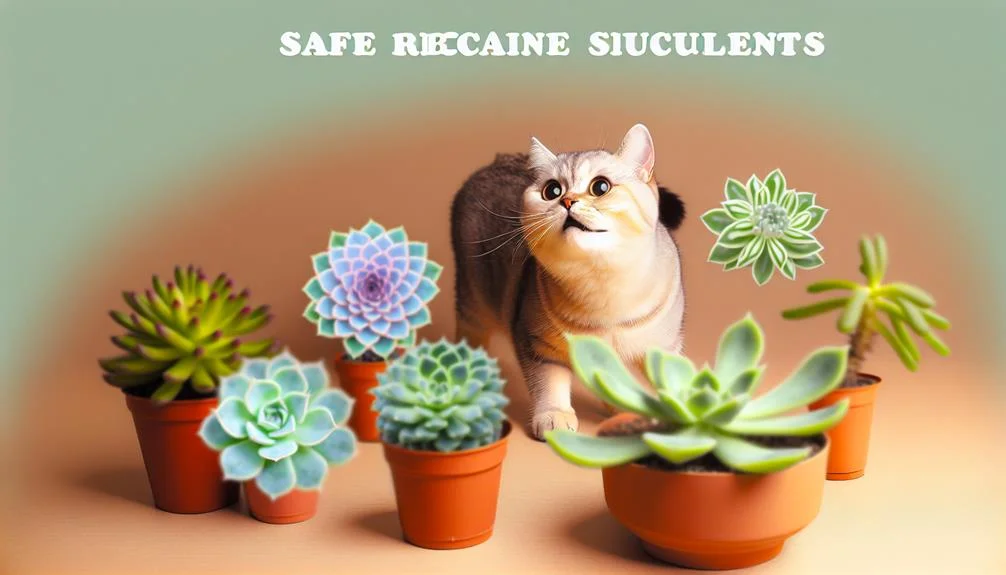
When choosing safe succulents that cats enjoy, opt for popular choices like Spider Plants, Christmas Cactus, and Haworthia to create an inviting and cat-friendly space in your home. Spider Plants are perfect for feline play with their swatting appeal, while Christmas Cacti bring color and are safe for curious cats to investigate. Haworthias are not only easy to care for but also provide a secure environment for your feline companion. Including these cat-approved succulents in your home decor offers both aesthetic charm and a safe haven for your pets.
Cat-Friendly Succulents: An Overview
When choosing succulents that are safe for your feline friend, consider their toxicity levels carefully. Cats are curious creatures that may nibble on plants, so it's essential to ensure the ones you bring into your home won't harm them. Some popular cat-friendly succulents include the Spider Plant, Christmas Cactus, and Haworthia. These varieties are known for being non-toxic to cats, making them great choices for pet owners looking to add greenery to their space without worrying about their furry companions.
Spider Plants, with their long, arching leaves and air-purifying qualities, are particularly beloved by cats for swatting. Christmas Cacti add a pop of color with their vibrant blooms, and cats can safely investigate them without concern. Haworthias, with their striking rosette shapes, are easy to care for and safe for curious felines to be around. By selecting these cat-friendly succulents, you can create a harmonious environment where both your plants and pets can thrive together.
Benefits of Safe Succulents for Cats
Selecting safe succulents for your cat not only enhances your home's decor but also promotes a healthy environment for your furry friend to explore and enjoy. Safe succulents provide numerous benefits for your cat's well-being. These plants can help improve the air quality in your home by releasing oxygen and absorbing toxins, creating a fresher and healthier living space for both you and your pet.
Additionally, safe succulents can serve as a source of mental stimulation for your cat, offering them a new environment to investigate and interact with. Cats are naturally curious creatures, and having safe plants around can satisfy their instinctual need to explore, reducing boredom and potentially minimizing destructive behavior.
Furthermore, safe succulents can add a touch of nature to your indoor environment, bringing a calming and peaceful atmosphere that can benefit both you and your cat. Overall, incorporating safe succulents into your home can contribute to a happier and healthier lifestyle for both you and your feline companion.
Top 5 Safe Succulents for Cat-Proofing
To cat-proof your home with safe succulents, consider these top 5 cat-friendly options that are both visually appealing and non-toxic to your feline companion.
- Hens and Chicks (Sempervivum tectorum): This succulent has rosette-shaped leaves and is easy to care for, making it a great addition to your cat-friendly space.
- Burro's Tail (Sedum morganianum): Known for its trailing stems adorned with plump leaves, Burro's Tail is safe for cats and adds a touch of elegance to your home.
- Echeveria: With its striking rosette shape and vibrant colors, Echeveria is a popular choice among succulent enthusiasts and safe for your curious cat.
- Ponytail Palm (Beaucarnea recurvata): This quirky succulent resembles a miniature palm tree and is non-toxic to cats, making it a charming and safe option for your home.
- Christmas Cactus (Schlumbergera): With its festive blooms and safe qualities for cats, the Christmas Cactus is a lovely choice for cat-proofing your living space.
These safe succulents not only enhance your home decor but also provide a cat-friendly environment that ensures the well-being of your furry friend.
How to Identify Toxic Succulents
To ensure the safety of your feline companion, it's important to be able to identify toxic succulents in your home. Some common toxic succulents include varieties like Kalanchoe, Euphorbia, and certain types of Jade plants. These plants contain substances that can be harmful to cats if ingested.
To identify toxic succulents, look for warning signs such as milky sap, thorns, or spines. Kalanchoe plants, for example, have thick, waxy leaves and colorful flowers, but their sap can cause gastrointestinal issues in cats. Euphorbia succulents often have a white, milky sap that can irritate the skin and cause vomiting if consumed by your cat.
Jade plants, while popular, can also be toxic to cats if ingested in large quantities. It's essential to research the succulents you have in your home to determine if they're safe for your furry friend. If you're unsure about a specific plant, consult with your veterinarian to ensure your cat's safety.
Succulent Arrangement Ideas for Cat Owners
For cat owners looking to create safe and stylish succulent arrangements, consider incorporating non-toxic varieties that your feline friend can enjoy without any worries. Opt for cat-friendly succulents such as Echeveria, Haworthia, and Burro's Tail, which are safe for your curious pet.
When arranging your succulents, ensure that they're placed in spots that are out of reach for your cat to prevent accidental nibbling. Hanging planters or elevated shelves can be great options to keep your succulents away from playful paws.
Mixing different textures, colors, and sizes of succulents can create visually appealing arrangements while adding depth and interest to your space. Grouping succulents with similar care requirements together can make maintenance easier for you.
Remember to avoid toxic varieties like Aloe Vera or Jade plants, and always double-check the safety of any new succulents you bring into your home.
Tips for Growing Safe Succulents Indoors
When growing safe succulents indoors, ensure you choose varieties that are non-toxic to your feline companions to maintain a pet-friendly environment. Opt for plants like Haworthia, Echeveria, or Burro's Tail, which are safe for cats if ingested.
Place your succulents in areas that aren't easily accessible to your curious pets, such as high shelves or hanging planters. Make sure your pots have proper drainage to prevent overwatering, as succulents are prone to root rot.
Provide adequate sunlight for your succulents by placing them near a window where they can receive indirect sunlight for a few hours a day. Consider using a well-draining cactus or succulent soil mix to ensure the health of your plants.
Monitor your succulents regularly for any signs of pests or diseases, and address any issues promptly to maintain a thriving indoor garden. By following these tips, you can enjoy a beautiful succulent collection while keeping your furry friends safe.
DIY Cat-Safe Succulent Garden
Create a cat-friendly succulent garden by selecting non-toxic plant varieties and strategically placing them in your home to ensure a safe environment for your furry companions. When choosing succulents for your garden, opt for pet-safe options such as hens and chicks (Sempervivum tectorum), echeverias, and Christmas cacti. These plants aren't harmful to cats if ingested, reducing the risk of poisoning.
Ensure your succulents are placed in areas that are out of reach for your curious feline friends to prevent any unwanted nibbling. Consider hanging planters, shelves, or tall stands to elevate your succulent garden and keep it away from prying paws. Additionally, make sure the pots are stable and not easily tipped over by your pets.
Common Cat Behaviors Around Succulents
Understanding your cat's behaviors around succulents can help you create a safe and enjoyable environment for both your pet and your plants. Cats are naturally curious creatures, and many find the textures and smells of succulents intriguing. You may notice your cat sniffing, pawing at, or even nibbling on your succulents. While this behavior may seem harmless, some succulents can be toxic to cats if ingested in large quantities. It's essential to monitor your cat's interactions with your plants closely to prevent any potential harm.
On the other hand, some cats may show little interest in succulents at all. They may simply ignore the plants or prefer to lounge in a sunny spot nearby without bothering them. Understanding your cat's individual behaviors and preferences can help you tailor your home environment to ensure both your feline friend and your beloved succulents coexist harmoniously. By observing and adapting to your cat's behaviors, you can create a cat-friendly space that's safe for your pet and your plants to thrive together.
Conclusion: Creating a Cat-Safe Oasis
To ensure a harmonious coexistence between your feline friend and your beloved succulents, establishing a cat-safe oasis is key. Start by strategically placing your succulents out of reach, either by hanging them from ceilings or placing them on high shelves. This prevents your cat from nibbling on them and keeps your plants safe from curious paws.
Consider incorporating cat-friendly plants like cat grass or catnip into your oasis. This provides a safe alternative for your cat to explore and satisfies their natural urge to chew on greens. Additionally, creating designated play areas with toys and scratching posts can help divert your cat's attention from your succulents.

Regularly inspect your succulents for any signs of damage or distress caused by your cat. Be prepared to relocate any plants that show signs of being tampered with to prevent further harm. By taking these precautions and making adjustments to your living space, you can enjoy a beautiful oasis of succulents while keeping your feline companion safe and happy.
Frequently Asked Questions
Can Cats Safely Eat Any of the Recommended Safe Succulents?
Cats shouldn't consume any succulents, even those deemed safe. While some plants may be non-toxic to felines, introducing new foliage into their diet can lead to digestive issues or allergic reactions.
To ensure your cat's well-being, stick to a diet recommended by a veterinarian. Monitoring your pet's environment and removing any potentially harmful plants is crucial for their safety and health.
Always prioritize your cat's health over their curiosity for plants.
Are There Any Safe Succulents That Can Help Deter Cats From Nibbling on Other Plants in the Home?
To deter cats from nibbling on other plants, consider placing succulents like echeveria, haworthia, or sedum around your home. These safe options are unappealing to cats due to their texture or taste. By strategically positioning these succulents, you can redirect your feline friend's attention away from more tempting plants.
Keep in mind that not all succulents are safe for cats, so always research before adding new greenery to your space.
How Can I Train My Cat to Leave My Succulents Alone?
To train your cat to leave your succulents alone, start by providing alternative scratching posts or toys to redirect their attention.
Use positive reinforcement like treats or praise when your cat shows desired behavior near the succulents.
Employ deterrents like double-sided tape or citrus scents on or near the plants to discourage nibbling.
Consistency is key; be patient and persistent in reinforcing the boundaries you set.
Are There Any Specific Care Tips for Safe Succulents That Are Beneficial for Both Cats and Plants?
When caring for safe succulents that are beneficial for both cats and plants, consider choosing non-toxic varieties like Haworthia, Spider Plant, or Christmas Cactus. Ensure proper watering to prevent overhydration, which can attract cats seeking moisture.
Place succulents out of reach to avoid accidental ingestion by cats. Regularly inspect plants for any signs of damage or wilting.
Can Safe Succulents Be Used as Natural Remedies for Common Cat Ailments or Behaviors?
Safe succulents can indeed serve as natural remedies for common cat ailments or behaviors. Certain plants like aloe vera can soothe skin irritations, while catnip can help with anxiety and stress.
Keep in mind that not all succulents are safe for cats, so always research before introducing a new plant to your feline friend's environment.
When used correctly, safe succulents can be a beneficial addition to your cat's well-being.
Conclusion
In conclusion, by incorporating safe succulents into your home, you can create a cat-friendly oasis that benefits both your furry friend and your living space.
With the right selection of non-toxic plants and proper care, you can enjoy the beauty of succulents without worrying about your cat's safety.
Remember to always research and choose cat-safe succulents to ensure a harmonious environment for both your pet and your plants.


