
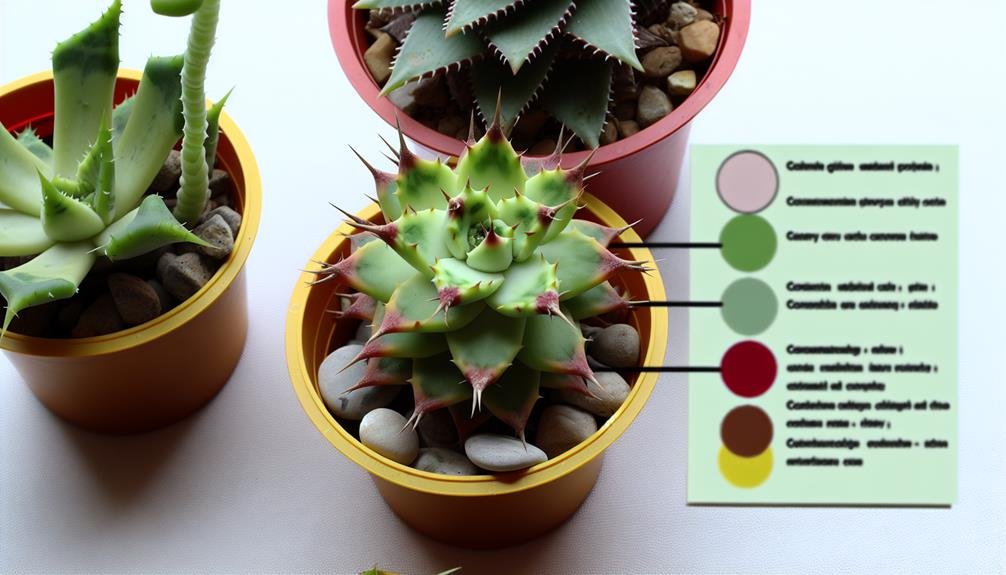
To identify which succulents are poisonous to humans, look out for common toxic species like Euphorbia, Kalanchoe, and Crown of Thorns. Pay attention to physical characteristics such as thorns, leaf color/texture, and unique patterns. Be cautious of succulents with milky or colored sap that can cause skin irritation. Verify toxicity information from reputable sources or online databases and know the names of toxic succulents like Kalanchoe, Euphorbia, Agave, and Crassula. Different species have varying toxicity levels, so be aware of risks associated with Euphorbia, Kalanchoe, Aloe vera, and Crassula. Understanding these identifiers is crucial for your safety when dealing with succulents.
Common Toxic Succulents
When identifying poisonous succulents, you may encounter common toxic varieties that are important to be aware of. One such succulent is the Euphorbia plant, known for its milky sap that can cause skin irritation and even be toxic if ingested.
Another common toxic succulent is the Kalanchoe, which contains cardiac glycosides that can cause serious heart rhythm disturbances if consumed.
Additionally, the Crown of Thorns succulent, with its sharp thorns and toxic sap, can lead to skin irritation and gastrointestinal issues if touched or ingested.
It is crucial to familiarize yourself with these common toxic succulents to ensure the safety of yourself and others around you. By recognizing their physical characteristics and understanding their potential toxicity, you can take necessary precautions when handling or growing these plants. Remember to always wear gloves when dealing with potentially poisonous succulents and wash your hands thoroughly after coming into contact with them to prevent any adverse reactions.
Physical Characteristics to Note
Pay attention to the physical features of succulents that can help you identify poisonous varieties. One key characteristic to note is the presence of thorns or spines. Many poisonous succulents have sharp thorns that can cause irritation or injury upon contact. Additionally, observe the color and texture of the leaves. Some toxic succulents have brightly colored or glossy leaves, which can serve as a warning sign. Take note of any unusual or distinct patterns on the leaves, as certain poisonous succulents may have unique markings that differentiate them from non-toxic varieties.
Furthermore, consider the overall size and shape of the succulent. Some poisonous species tend to be larger and more robust compared to their non-toxic counterparts. Pay attention to the growth habit as well; certain toxic succulents may have a sprawling or densely clustered growth pattern. By being observant of these physical characteristics, you can better differentiate between poisonous and non-poisonous succulents in your collection.
Poisonous Sap Indicators
Examine the sap of succulents as a crucial indicator of their toxicity levels. The sap, also known as latex, is a milky or colored fluid found in the leaves, stems, or roots of many succulent plants. When handling succulents, be cautious of any sap that oozes out, as it can cause skin irritation or allergic reactions in some individuals.
Some succulents like Euphorbia species produce a toxic sap that can be severely irritating to the skin and harmful if ingested. This sap is a key warning sign of potential toxicity. Succulents with poisonous sap may cause symptoms like dermatitis, blistering, or more severe reactions in sensitive individuals.
Therefore, it's vital to wear gloves and avoid contact with the sap when handling potentially toxic succulents. By being aware of the sap's properties and taking precautions, you can minimize the risk of adverse effects from handling poisonous succulents.
Researching Toxicity Information
To better understand the toxicity levels of succulents, it's important to research reliable information regarding their potential hazards. When researching toxicity information, consider consulting reputable sources such as botanical gardens, extension offices, or poison control centers. These sources can provide specific details on which succulents are toxic to humans, the parts of the plant that pose a risk, and the potential symptoms of exposure. Look for scientific studies, articles from horticultural experts, or publications from reliable organizations to ensure the information is accurate and up to date.
Additionally, online databases dedicated to plant toxicity can be valuable resources for identifying poisonous succulents. Websites like the ASPCA's database on toxic and non-toxic plants or the Poisonous Plants Bibliography from the U.S. National Library of Medicine offer comprehensive information on the toxicity of various plants, including succulents. By conducting thorough research and cross-referencing information from multiple credible sources, you can confidently identify which succulents may pose a risk to human health.
Identifying Toxic Succulents by Name
When looking to identify toxic succulents by name, start by familiarizing yourself with the common names and scientific classifications of these plants.
Some common toxic succulents include the Kalanchoe species, such as Kalanchoe daigremontiana (Mother of Thousands) and Kalanchoe tomentosa (Panda Plant), known for their toxic effects when ingested. Another poisonous succulent is Euphorbia tirucalli (Pencil Cactus), which produces a toxic milky sap that can cause skin irritation and other health issues. Agave species like Agave americana (Century Plant) contain toxic compounds that can cause skin irritation and other allergic reactions.
Other toxic succulents to be aware of include Crassula ovata (Jade Plant), which can be harmful if ingested in large quantities, and Euphorbia milii (Crown of Thorns), known for its toxic sap.
Handling and Care Precautions
To handle and care for toxic succulents effectively, it's crucial to understand the specific precautions necessary in order to ensure your safety when interacting with these plants. When dealing with poisonous succulents, always wear gloves to protect your skin from potential irritants or toxins. It's also essential to avoid contact with your eyes and mouth while handling these plants, as some toxic substances can cause irritation or more severe reactions if they come into contact with mucous membranes.
Furthermore, make sure to keep toxic succulents out of reach of children and pets, as ingestion can lead to harmful effects. When repotting or pruning toxic succulents, work in a well-ventilated area to minimize inhalation of any potentially harmful particles or allergens that some plants may release. If you experience any adverse reactions after interacting with a toxic succulent, such as skin irritation or respiratory issues, seek medical attention promptly.
Toxicity Levels in Different Species
Understanding the varying toxicity levels of different succulent species is crucial for ensuring safe interactions with these plants. Some succulents, such as the Euphorbia genus, contain toxic latex that can cause skin irritation and more severe reactions if ingested.
Others, like the Kalanchoe species, have compounds that may lead to gastrointestinal issues or skin irritation. The Aloe vera plant, while known for its healing properties, can cause stomach discomfort if consumed in large quantities.
Additionally, certain types of Crassula can be mildly toxic if ingested in large amounts, leading to symptoms like vomiting or diarrhea. It's essential to research and understand the specific toxicity levels of the succulents you have in your collection to prevent any potential harm.
Always handle these plants with care, especially when children or pets are around, to avoid accidental ingestion or contact with toxic substances.
Symptoms of Succulent Poisoning
Identify the symptoms of succulent poisoning to promptly address any potential health concerns. Symptoms of succulent poisoning can vary depending on the species ingested and the individual's sensitivity. Common signs of succulent poisoning include skin irritation or rash upon contact with the plant's sap, which may cause redness, itching, or a burning sensation. Ingesting toxic succulents can lead to symptoms such as nausea, vomiting, diarrhea, abdominal pain, and in severe cases, difficulty breathing or irregular heartbeats. Some poisonous succulents might also cause dermatitis when touched, resulting in blistering or skin peeling.
If you suspect succulent poisoning, seek medical attention immediately. It's crucial to inform healthcare providers about the plant involved to receive appropriate treatment. Treatment for succulent poisoning may include symptom management, such as hydration for gastrointestinal symptoms, skin soothing treatments for rashes, or in severe cases, supportive care in a medical facility. Early recognition of symptoms and prompt medical intervention are vital in managing succulent poisoning effectively.
Child and Pet Safety Measures
If you have young children or pets in your household, taking preventative measures to ensure their safety around succulents is paramount. While many succulents are safe, some can pose risks if ingested or touched.
To keep your loved ones safe, consider placing toxic succulents out of reach in hanging planters or on high shelves. Be cautious when planting new succulents, ensuring that they're non-toxic varieties.

Teach children not to touch or ingest plants without permission, and supervise interactions with succulents closely. Remember that pets may also be curious about these plants, so it's essential to create barriers or designated pet-free zones where toxic succulents are kept.
In case of accidental ingestion or exposure, have the contact information for a poison control center and your veterinarian readily available. By implementing these safety measures, you can enjoy your succulent collection while keeping your children and pets safe from potential harm.
Consultation With Experts
For expert guidance on identifying and handling poisonous succulents, consider consulting with experienced horticulturists or botanists. These professionals possess in-depth knowledge of various plant species, including succulents, and can provide valuable insights on which ones may be harmful to humans.
When seeking advice from horticulturists or botanists, be prepared to describe the physical characteristics of the succulent in question, such as its size, shape, color, and any distinctive features like thorns or spines. Additionally, inform them of any symptoms experienced after contact with the plant, as this information can aid in accurate identification.
Horticulturists and botanists can also offer recommendations on safe handling practices, protective gear to use when dealing with potentially toxic succulents, and steps to take in case of accidental exposure. By consulting with experts in the field, you can gain a better understanding of poisonous succulents and how to effectively manage them in your environment.
Frequently Asked Questions
Can Succulents That Are Toxic to Humans Also Be Poisonous to Pets?
Yes, succulents toxic to humans can also harm pets. Some succulents contain substances that are harmful to both humans and animals if ingested. It's important to research specific succulents to understand their potential toxicity to pets.
Keep these plants out of reach to prevent accidental ingestion. Look for warning signs such as vomiting, diarrhea, or lethargy in pets that may have consumed toxic succulents, and seek veterinary care immediately if needed.
Is It Safe to Touch Poisonous Succulents With Bare Hands?
It's generally safe to touch poisonous succulents with bare hands, as most toxic substances are only released upon ingestion or contact with mucous membranes. However, it's advisable to wash your hands thoroughly after handling them to prevent accidental ingestion.
If you have sensitive skin or allergies, wearing gloves can provide an extra layer of protection. Be cautious with open wounds, as some succulents may cause skin irritation or allergic reactions.
Are There Any Natural Remedies or Antidotes for Succulent Poisoning?
If you suspect succulent poisoning, seek medical help immediately.
There are no specific natural remedies or antidotes for succulent poisoning. Treatment will depend on the type and severity of symptoms.
Stay calm, keep the affected person comfortable, and provide any relevant information to healthcare professionals.
Can Succulent Poisoning Have Long-Term Health Effects?
Succulent poisoning can indeed have long-term health effects. Depending on the type of succulent ingested and the amount, symptoms can range from mild irritation to severe reactions like organ damage or even death.
It's crucial to seek medical attention immediately if you suspect succulent poisoning. Long-term effects may vary, but prompt treatment is essential to minimize potential risks and ensure the best possible outcome for your health.
How Do I Safely Dispose of Toxic Succulents if I Need to Remove Them From My Garden?
When disposing of toxic succulents from your garden, wear gloves to protect your skin.
Use a spade to carefully dig around the plant, ensuring you remove the roots.
Place the entire plant, including the roots, in a sealed plastic bag.
Dispose of it in the trash to prevent accidental ingestion by animals or children.
Avoid composting toxic succulents to prevent any potential spread of harmful substances in your garden.
Conclusion
In conclusion, identifying poisonous succulents involves several steps:
- Recognizing common toxic species
- Noting physical characteristics and sap indicators
- Researching toxicity levels
- Consulting experts for accurate information
It's essential to be aware of the symptoms of succulent poisoning and take precautions to ensure the safety of children and pets. By following these steps, you can effectively identify which succulents are harmful to humans and take necessary measures to prevent any potential risks.


