
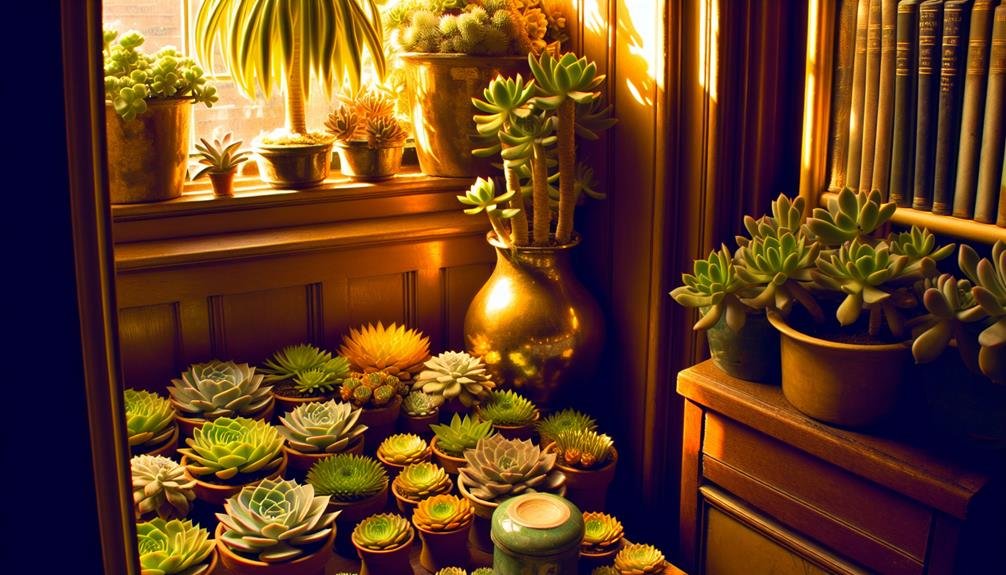
To keep your succulents thriving indoors as a beginner, start by choosing varieties that require minimal watering and suit your climate, such as Echeverias or Sedums. Place them in spots with bright, indirect sunlight, near windows receiving at least six hours of light daily. Opt for well-draining soil mixes like cactus or succulent mix to prevent root rot, avoiding traditional potting soil. Remember to water thoroughly using the 'soak and dry' method, allowing the soil to dry out between waterings. Select containers with drainage holes and porous materials to ensure healthy root growth. Check for pests regularly, like aphids or mealybugs, and use natural remedies if needed.
By focusing on light, soil, water, containers, pests, common mistakes, propagation, and additional care tips, you'll set yourself up for success in caring for your indoor succulents.
Choosing the Right Succulents
When selecting succulents, opt for varieties that require minimal watering and thrive in your specific climate. Succulents come in various shapes, sizes, and colors, so it's essential to choose ones that will do well in your environment. Some popular low-maintenance options include Echeverias, Sedums, and Haworthias. These varieties are known for their resilience and ability to survive with minimal care.
Consider the amount of sunlight your space receives when choosing succulents. While most succulents prefer bright light, some can tolerate lower light conditions. If you have a sunny spot at home, opt for sun-loving succulents like Aloe Vera or Jade plants. On the other hand, if your space has less natural light, go for varieties such as Snake Plants or Zebra Cacti.
Understanding Light Requirements
To ensure your succulents thrive, understanding their light requirements is key to their overall health and growth. Succulents typically require bright, indirect sunlight to prosper indoors. Place your succulents near a window that receives sunlight for at least six hours a day. East or south-facing windows are usually ideal for providing sufficient light without the risk of scorching the plants.
Keep an eye on your succulents; if they start stretching or leaning towards the light source, they mightn't be getting enough sunlight. On the other hand, if you notice signs of sunburn like brown spots or wilting, your succulents may be getting too much direct sunlight. Rotating your plants every few days can help ensure they receive light evenly on all sides.
Understanding the light requirements of your succulents is crucial for their well-being and will contribute significantly to their longevity indoors.
Selecting the Ideal Soil
Choosing the right soil is crucial for the health and growth of your succulents. Succulents thrive in well-draining soil that prevents water from pooling around their roots, which can lead to root rot. Opt for a cactus or succulent mix, readily available at garden centers, to ensure proper drainage. These mixes often contain sand, perlite, or pumice to help aerate the soil and prevent excess moisture retention. It's essential to avoid using traditional potting soil, as it tends to retain more water, increasing the risk of overwatering and root issues.
When selecting soil for your succulents, look for a gritty texture that allows water to pass through quickly. This texture mimics the natural environment of succulents, typically found in sandy or rocky soils with excellent drainage. Additionally, consider adding some coarse sand or perlite to your soil mix if it feels too dense. Remember, the right soil sets the foundation for healthy succulents by providing the necessary aeration and drainage they need to thrive indoors.
Proper Watering Techniques
For healthy succulents, mastering the art of proper watering is essential to prevent issues like overwatering and root rot. Succulents are adapted to survive in arid conditions, storing water in their leaves, stems, or roots. When watering your succulents, it's crucial to follow a 'soak and dry' method. This means thoroughly watering the soil until it's damp all the way through, allowing excess water to drain out completely. Ensure the soil dries out between watering sessions; this helps prevent waterlogged conditions that can lead to rot.
To determine when your succulents need watering, stick your finger about an inch into the soil. If it feels dry at that depth, it's time to water. Remember, it's better to underwater than overwater succulents. Overwatering is one of the most common causes of succulent death. During the dormant season, reduce watering frequency as the plants require less moisture. By mastering proper watering techniques, you'll help your succulents thrive indoors.
Finding the Best Containers
When selecting containers for your succulents, prioritize those with drainage holes to prevent waterlogging and promote healthy root growth. Proper drainage is essential in preventing root rot, a common issue with succulents caused by excess water.
Opt for pots made from porous materials like terracotta or ceramic, as they allow for better air circulation around the roots. Ensure that the container isn't too large for your succulent, as excessive soil can retain moisture longer, increasing the risk of overwatering.
Additionally, consider the aesthetic aspect of the container, choosing a style that complements your home decor while still meeting the plant's needs. Remember that shallow containers are ideal for succulents due to their shallow root systems.
Select containers that are sturdy and stable to prevent tipping over as your succulent grows. By choosing the right container, you provide your succulent with a healthy environment to thrive indoors.
Dealing With Pests
To effectively manage pests on your succulents, regularly inspect both the plants and the surrounding soil for any signs of infestation. Check for common pests like aphids, mealybugs, spider mites, and scale insects. These pests can damage your succulents by feeding on the plant juices or causing mold growth. If you notice any pests, consider using natural remedies such as neem oil or insecticidal soap to control the infestation.
Another way to prevent pests is by avoiding overwatering your succulents. Excess moisture can attract pests and create a hospitable environment for them to thrive. Ensure that your succulents are planted in well-draining soil and water them only when the top inch of soil is dry.
Furthermore, introducing beneficial insects like ladybugs or predatory mites can help keep pest populations in check. These beneficial insects feed on common succulent pests, aiding in natural pest control. By staying vigilant and following these practices, you can effectively manage pests and keep your succulents healthy and thriving.
Avoiding Common Mistakes
Common mistakes can easily be avoided with proper succulent care practices. One of the most common errors is overwatering. Succulents store water in their leaves, so they don't need frequent watering. Allow the soil to dry out completely between waterings to prevent root rot.
Another mistake is using the wrong type of soil. Succulents thrive in well-draining soil mixes specifically designed for them. Regular potting soil retains too much moisture and can harm your plants.
Insufficient sunlight is another common misstep. Succulents need plenty of light to thrive. Place them near a sunny window where they can receive at least six hours of sunlight daily. Avoid the temptation to overcrowd your succulents. Give them enough space to allow for proper airflow, which helps prevent issues like mold and pests.
Lastly, not paying attention to temperature fluctuations can harm your succulents. These plants prefer consistent temperatures and can be sensitive to extreme cold or heat. By being mindful of these common mistakes, you can ensure your succulents stay healthy and vibrant indoors.
Tips for Succulent Propagation
For successful succulent propagation, proper preparation and technique are key to ensuring new plants thrive. Begin by selecting a healthy leaf or stem cutting from a mature succulent. Allow the cutting to callus over for a few days in a warm, dry place to prevent rotting. Once calloused, plant the cutting in a well-draining soil mix, lightly misting the soil every few days to keep it moist but not soggy. Place the newly planted cutting in a bright location with indirect sunlight to encourage root development.
Another method of propagation is through offsets, also known as pups. Gently remove the offset from the parent plant using a clean, sharp knife. Allow the offset to dry for a day or two before planting it in a small pot with well-draining soil. Water the offset sparingly until roots develop, then gradually transition to a regular watering schedule.
With these propagation tips, you can expand your succulent collection and enjoy the rewarding process of growing new plants from existing ones.

Frequently Asked Questions
Can Succulents Be Grown Under Artificial Light Indoors?
Yes, succulents can thrive under artificial light indoors. Choosing the right type of artificial light is crucial for their growth. Opt for full-spectrum LED lights or grow lights to mimic natural sunlight.
Place the lights close to the succulents, ensuring they receive around 12-16 hours of light daily. Keep an eye on their color and growth to adjust the light intensity and duration accordingly.
With proper care, your indoor succulents can flourish under artificial lighting.
How Often Should Succulents Be Fertilized?
To keep your succulents healthy, fertilize them sparingly. A general rule is to fertilize every 2-4 weeks during the growing season in spring and summer. Once every 6-8 weeks is sufficient during fall and winter when growth slows down.
Use a balanced, water-soluble fertilizer diluted to half the recommended strength to avoid overfeeding. Remember, too much fertilizer can harm your succulents, so stick to a light feeding schedule.
Is It Necessary to Repot Succulents After Purchasing Them?
After purchasing succulents, repotting may not be necessary immediately. However, it's generally recommended to repot them within a few weeks to ensure proper growth.
Repotting allows for fresh soil, better drainage, and more space for the roots to expand. It also helps in removing any compacted soil from the nursery.
Observing the plant's health and growth can guide you in determining the right time to repot for optimal succulent care.
Can Succulents Be Placed Near Air Conditioning or Heating Vents?
You should avoid placing succulents near air conditioning or heating vents. The constant flow of hot or cold air can dry out the plants quickly, leading to dehydration.
Succulents thrive in environments with good airflow but not direct exposure to drafts. To keep them healthy, position them in areas where they can receive adequate sunlight and maintain a consistent temperature.
This will help prevent stress on the plants and promote their longevity indoors.
How Can I Prevent My Succulents From Becoming Leggy and Stretched Out?
To prevent succulents from becoming leggy and stretched out, ensure they receive adequate sunlight. Lack of light leads to stretching.
Rotate your plants regularly to promote even growth. Avoid overwatering, as this can cause weak, elongated stems.
Prune leggy growth to encourage bushier, healthier plants. Consider repotting if roots are overcrowded.
Conclusion
In conclusion, keeping succulents alive inside requires selecting the right plants, providing adequate light, using well-draining soil, watering sparingly, choosing appropriate containers, addressing pest issues promptly, and avoiding common mistakes.
By following these guidelines and incorporating tips for propagation, you can successfully care for your indoor succulents. Remember to observe their individual needs and adjust your care routine as necessary to ensure their health and longevity.
With proper attention and care, your indoor succulents will thrive beautifully.


