
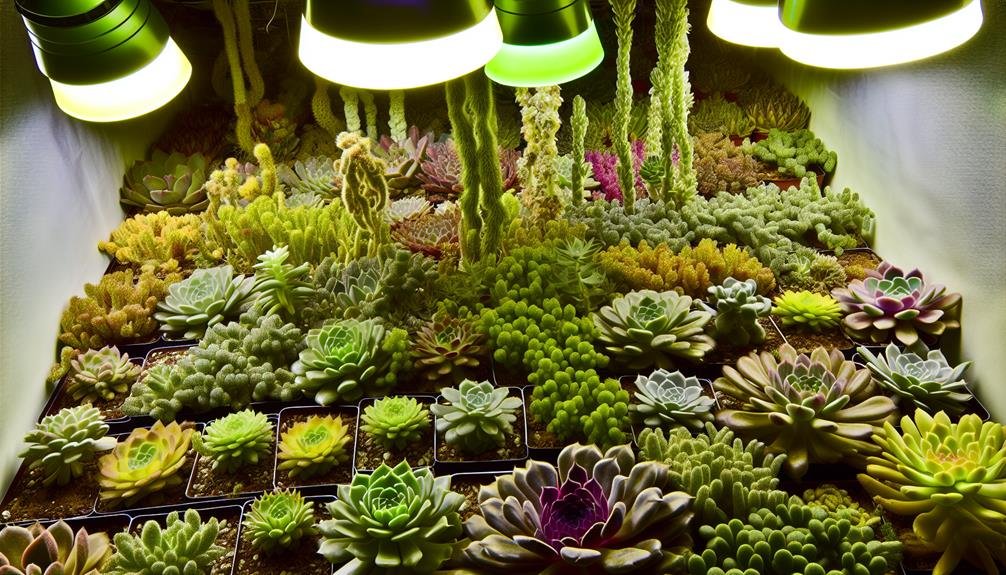
To grow succulents without sunlight, select species like Haworthia, Gasteria, or Sansevieria that adapt well to shade. These plants store water efficiently in their thick leaves, perfect for low-light conditions. Use pots with drainage holes and a well-draining soil mix of perlite, coarse sand, and potting soil to prevent root rot. Water sparingly, allowing the soil to dry out completely between waterings to avoid issues like etiolation.
Consider using a balanced, water-soluble fertilizer with higher phosphorus content every 2-4 weeks during the growing season and adjusting based on plant needs. Mastering these techniques will assist in nurturing your succulents effectively in low-light environments, ensuring their optimal growth and health.
Understanding Succulents in Low Light
If you're wondering how succulents thrive in low light conditions, their unique adaptations allow them to survive with minimal sunlight. Succulents are plants that have evolved to store water in their leaves, stems, or roots, enabling them to withstand periods of drought. In low light settings, succulents have developed strategies to make the most of the little sunlight available. They often have thicker leaves or stems, which help them retain water more efficiently and require less frequent watering.
Additionally, succulents in low light may exhibit elongation, stretching out to seek more light. This phenomenon is known as etiolation and is a common response to insufficient light. While succulents are known for their love of sunlight, they can adapt surprisingly well to low light conditions. However, it's essential to be mindful of the specific type of succulent you have, as some species are better suited for low light environments than others. By understanding these adaptations, you can successfully grow and care for your succulents even in areas with limited natural light.
Selecting the Right Succulents
Choosing the appropriate succulent varieties is crucial for successful growth in low light conditions. When selecting succulents for low light environments, opt for species that are naturally adapted to shade or indirect light. Some suitable options include Haworthia, Gasteria, and Sansevieria varieties. These succulents have lower light requirements compared to sun-loving species like Echeveria or Sedum, making them better suited for indoor environments with limited sunlight.
Look for succulents with darker green leaves, as they tend to perform better in low light settings due to their ability to capture and utilize light more efficiently. Additionally, consider choosing succulents with thicker leaves, as they can store more water and withstand longer periods between watering in dimmer conditions.
Proper Potting and Soil Mix
To ensure successful growth of succulents in low light conditions, proper potting and soil mix are essential components. When selecting pots for your succulents, opt for containers with drainage holes to prevent waterlogging, as excess moisture can lead to root rot.
Choose a well-draining potting mix specifically designed for succulents or create your own by combining equal parts of perlite, coarse sand, and potting soil. This mix promotes good airflow and prevents water from pooling around the roots.
When repotting your succulents, gently loosen the roots and remove any dead or rotting parts before placing them in fresh soil. Avoid burying the stem too deeply to prevent rot. Additionally, consider using pots with a slightly larger size than the current one to allow room for growth.
Remember to water your newly potted succulents sparingly to avoid overwatering, as they may take longer to establish in low light conditions. By providing the right potting and soil mix, you can set your succulents up for success in environments with limited sunlight.
Watering Techniques for Low Light
When caring for succulents in low light, mastering effective watering techniques is key to maintaining their health and vitality. Succulents in low light conditions require less water than those in brighter environments. Overwatering can lead to root rot, so it's crucial to strike a balance.
One effective watering technique is to water your succulents less frequently but deeply. Allow the soil to dry out completely between waterings to prevent issues like fungal growth. When watering, ensure that excess water can drain freely from the pot to avoid waterlogged soil.
Consider using a watering schedule based on the specific needs of your succulents and the light conditions they receive. It's better to underwater than overwater, as succulents are more resilient to drought than excess moisture. Pay attention to signs of dehydration, like shriveled leaves, which indicate that it's time to water your plants.
Fertilizing Strategies for Indoor Succulents
For healthy indoor succulents, ensure you fertilize them appropriately to support their growth and resilience. When choosing a fertilizer, opt for a balanced, water-soluble formula specifically designed for succulents. Look for a fertilizer with a higher phosphorus content to promote root development and flowering. During the growing season in spring and summer, apply a diluted fertilizer solution every two to four weeks. In fall and winter, when succulents are dormant, reduce fertilization to once every two months or even less.
Remember to always dilute the fertilizer to prevent burning the roots. Follow the instructions on the fertilizer packaging carefully to avoid overfeeding your succulents. Additionally, consider using a fertilizer with micronutrients like iron, zinc, and manganese to ensure your succulents receive a well-rounded diet. Over time, observe your succulents for signs of nutrient deficiencies or excesses, such as yellowing leaves or stunted growth, and adjust your fertilizing routine accordingly. By providing the right nutrients in the right amounts, you can help your indoor succulents thrive even without direct sunlight.
Troubleshooting Common Issues
Ensure your indoor succulents are thriving by promptly addressing any common issues that may arise.
One common problem is overwatering, which can lead to root rot. To remedy this, reduce watering frequency and ensure proper drainage in your pots. If you notice your succulent's leaves becoming mushy or discolored, it may be a sign of overwatering.
On the other hand, underwatering can cause shriveled leaves and stunted growth. Increase your watering schedule, but always allow the soil to dry out between waterings.
Pests like mealybugs or spider mites can also infest indoor succulents. To combat this, wipe down leaves with a damp cloth and consider using insecticidal soap.
If your succulent's leaves start turning yellow or brown, it might indicate sunburn. Gradually acclimate your plant to more light to prevent further damage.
Frequently Asked Questions
Can Succulents Survive in Complete Darkness?
In complete darkness, succulents struggle to survive due to their need for light to carry out photosynthesis, a vital process for their growth. Without light, their metabolism slows down significantly, leading to weak and unhealthy plants.
Over time, succulents kept in complete darkness will eventually wither and die. To ensure your succulents thrive, it's essential to provide them with adequate light to support their growth and overall health.
Can Artificial Light Be Used as a Substitute for Natural Sunlight for Succulents?
Yes, artificial light can be a suitable substitute for natural sunlight when growing succulents. LED grow lights are particularly effective because they emit the necessary wavelengths for photosynthesis.
Position the lights close to the plants and ensure they receive about 12-16 hours of light per day. Remember to monitor the distance and duration to prevent burning or overexposure.
With proper care and the right lighting setup, succulents can thrive indoors without direct sunlight.

How Can I Tell if My Succulent Is Not Getting Enough Light?
If your succulent isn't getting enough light, you may notice signs like:
- Stretching or leaning towards the light source
- Pale or faded coloration
- Slow growth
- Leggy appearance
Additionally, the spacing between leaves might increase, and the plant could become etiolated. Insufficient light can weaken succulents, impacting their overall health and resilience.
If you observe these indicators, consider adjusting their light exposure to ensure optimal growth and vitality.
Are There Any Specific Temperature Requirements for Succulents Grown in Low Light Conditions?
In low light conditions, succulents benefit from temperatures between 60-75°F. Consistent warmth aids their growth, but avoid extremes beyond this range. Cold drafts or overly hot spots can harm them.
Maintain a stable environment to support their health. Consider a thermometer near your plants to monitor conditions. Remember, temperature plays a crucial role in their well-being, so keep a close eye on it for optimal growth.
Can Succulents Be Placed Near a Window With Frosted Glass for Indirect Light?
Yes, placing succulents near a window with frosted glass for indirect light can be beneficial. While they thrive in bright light, this setup can work well for certain types of succulents that can tolerate lower light conditions. Ensure the glass still allows some light transmission, as too much opacity might hinder growth.
Monitor your plants closely for signs of stretching or discoloration, adjusting their placement if needed to optimize their light intake.
Conclusion
In conclusion, growing succulents without sunlight is possible with the right selection of low-light tolerant varieties, proper potting and soil mix, watering techniques, and fertilizing strategies.
By understanding the needs of your indoor succulents and addressing any common issues that may arise, you can successfully cultivate these plants in low light conditions.
Remember to observe your succulents closely, adjust care as needed, and enjoy the beauty of these unique and resilient plants in your home.


