
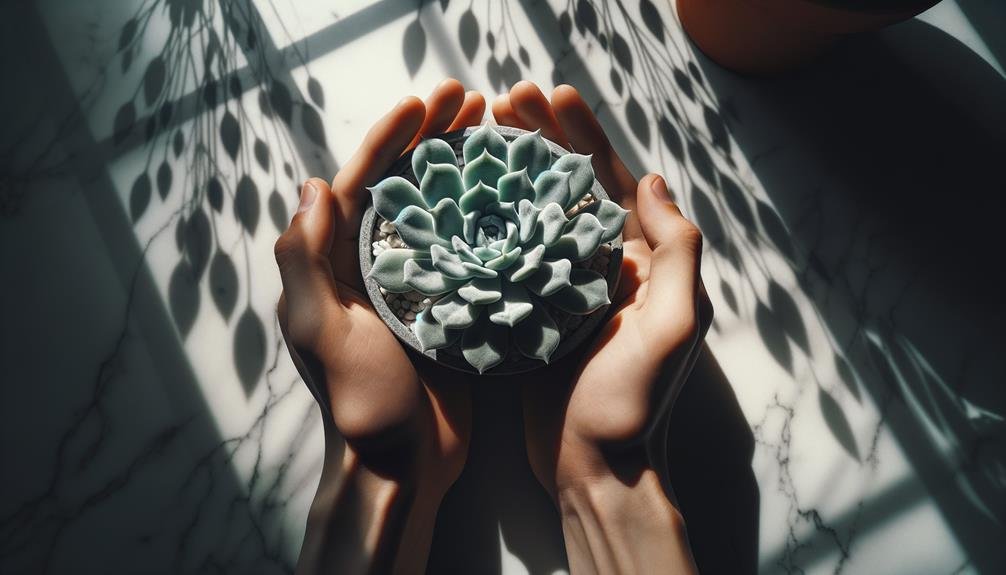
To take care of your Orostachys, make sure they receive at least six hours of direct sunlight daily for vibrant growth. Water when the top inch of soil is dry, approximately every 1-2 weeks, avoiding soggy conditions. Use well-draining soil with a combination of cactus potting mix, perlite, and coarse sand to prevent root rot. Propagate using leaf cuttings, allowing them to callus before planting in bright, indirect light. Watch for pests like aphids and diseases such as root rot, addressing them promptly. Proper care is crucial for these succulents to thrive and stay healthy.
Sunlight Requirements
To prosper, Orostachys require direct sunlight for at least six hours a day. Placing them in a spot where they can absorb the sun's rays will keep them healthy and vibrant. Remember, these plants love the sun, so don't hesitate to let them bask in its glow.
When positioning your Orostachys, aim for a location that receives abundant sunlight throughout the day. This will guarantee they receive the light they need to thrive. Whether it's a sunny windowsill or a bright spot in your garden, find a place where they can truly shine.
Watering Guidelines
Position your Orostachys in a location where they can receive adequate sunlight throughout the day, ensuring they thrive, and now let's discuss the watering guidelines.
When it comes to watering your Orostachys, finding the right balance is crucial. These plants don't like to sit in soggy soil, so make sure the soil is well-draining. Water your Orostachys when the top inch of the soil feels dry to the touch. This usually means watering them every 1-2 weeks, but always check the soil moisture to be sure.
When watering, do so thoroughly but make sure excess water can drain away. It's preferable to water deeply once in a while than to give small amounts frequently. During the winter months or when the plant is dormant, reduce watering to prevent root rot. Remember, overwatering is one of the main reasons for Orostachys to struggle. By following these watering guidelines, you'll help your Orostachys stay healthy and happy.
Soil Preferences
Selecting the appropriate type of soil is crucial for the well-being and development of your Orostachys. These plants thrive in well-draining soil that prevents water from pooling around their roots. A combination of cactus potting mix and perlite in a 2:1 ratio is ideal for your Orostachys, guaranteeing they receive the right balance of moisture and oxygen. This type of soil mimics their natural habitat and helps prevent root rot, a common issue with improper drainage.
When preparing the soil for your Orostachys, make sure to mix in some coarse sand as well. This addition aids in further improving drainage and prevents the soil from compacting too tightly around the roots. Remember to repot your Orostachys every 2-3 years to refresh the soil mixture and ensure your plant continues to thrive.
Propagation Methods
For successful propagation of your Orostachys, consider using leaf cuttings as a dependable method. To propagate your Orostachys through leaf cuttings, choose a healthy leaf from the plant and carefully detach it, making sure to include a small portion of the stem. Allow the leaf cutting to form a callus for a few days before placing it on well-draining soil. Keep the soil lightly moist and in a bright, indirect light location to promote root formation. With proper care and patience, you should start to see new growth emerging from the base of the leaf cutting, indicating successful propagation.
Another effective propagation method for Orostachys is division. When your plant has grown large enough, gently separate the offsets or pups from the main plant using a clean, sharp knife. Ensure each division has some roots attached and plant them in their individual pots with well-draining soil. Provide adequate watering and indirect sunlight to help the divisions establish themselves. By following these propagation methods, you can easily expand your Orostachys collection and share the joy of growing these beautiful succulents with others.
Common Pests and Diseases
To keep your Orostachys healthy, regularly inspect for signs of common pests and diseases.
Common pests that may affect your Orostachys include aphids, mealybugs, and spider mites. These tiny intruders can cause damage by sucking the sap from the plant, leading to wilting and yellowing of leaves. To combat these pests, gently wash the leaves with a mixture of water and mild soap or use insecticidal soap.
Additionally, keep an eye out for signs of diseases such as root rot, powdery mildew, and leaf spot. Root rot, caused by overwatering, can be prevented by ensuring proper drainage and allowing the soil to dry out between waterings. Powdery mildew and leaf spot can be treated with fungicidal sprays.
Frequently Asked Questions
Can Orostachys Be Grown Indoors as Houseplants?
Yes, Orostachys can thrive indoors as houseplants if provided with adequate sunlight and well-draining soil. They prefer bright, indirect light and do well in temperatures around 65-75°F.
Water sparingly, allowing the soil to dry between waterings to prevent root rot. Fertilize lightly during the growing season to support healthy growth.
Regularly check for pests and maintain good air circulation to keep your Orostachys happy and flourishing indoors.
How Often Should Orostachys Be Fertilized?
To fertilize Orostachys, apply a balanced liquid fertilizer diluted to half strength every 2-4 weeks during the growing season. Make sure not to over-fertilize, as it can harm the plant. Monitor the plant's growth and adjust the fertilization schedule accordingly.
Are There Any Specific Temperature Requirements for Orostachys?
Orostachys typically prefer temperatures ranging from 60 to 75 degrees Fahrenheit. This range mimics their natural habitat and helps them thrive. Extreme heat or cold can stress the plant, affecting its growth and health. Maintaining a consistent temperature within this range will promote ideal conditions for your Orostachys.
Be mindful of drafts or sudden temperature fluctuations, as they can impact the plant's well-being.
Can Orostachys Be Used in Landscaping or Rock Gardens?
Yes, orostachys can be a fantastic addition to landscaping or rock gardens. Their unique rosette shapes and vibrant colors can bring a lovely texture and visual interest to your outdoor space.
These hardy succulents are low-maintenance and drought-tolerant, making them ideal for adding a pop of color and greenery to rocky areas or garden beds. Consider incorporating them into your landscaping design for a beautiful and easy-to-care-for touch.
How Long Do Orostachys Plants Typically Live?
Orostachys plants typically live for 3-5 years, depending on care and growing conditions. They're hardy succulents that can thrive with proper attention.
Regular watering, well-draining soil, and adequate sunlight are key to their longevity. Keep an eye out for signs of disease or pests to guarantee a healthy lifespan.
Conclusion
In summary, tending to orostachys involves providing ample sunlight, watering sparingly, using well-draining soil, and employing proper propagation techniques.
Being vigilant against common pests and diseases is vital to maintaining the health of your orostachys plants.

By following these care tips diligently, you can guarantee that your orostachys thrive and grow successfully in your garden or indoor space.
Remember to monitor their growth regularly and make adjustments as needed to support their well-being.


