
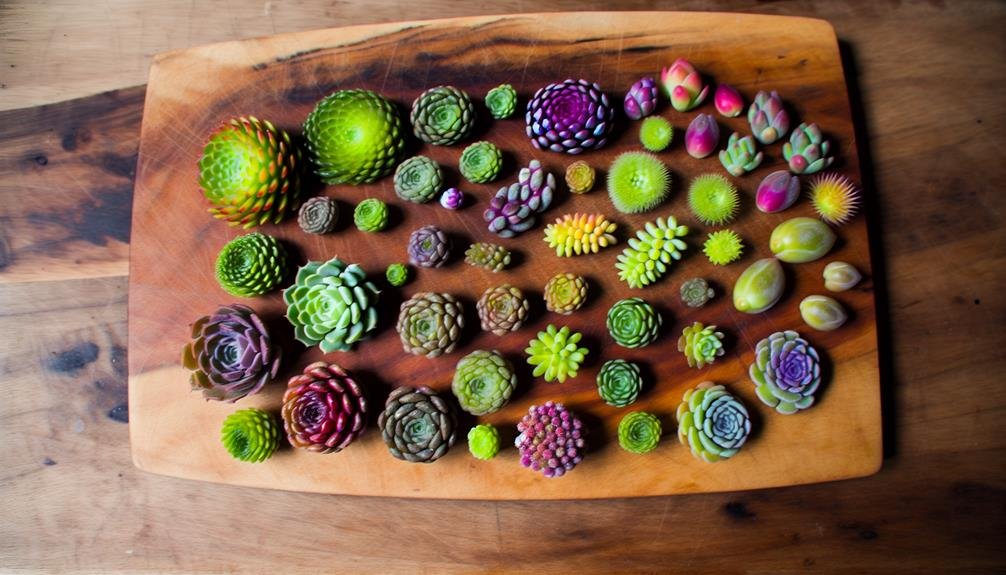
If you're looking to explore the world of edible succulents, consider starting with Aloe Vera, Purslane, Prickly Pear, Nopal, Kalanchoe, and Agave. Aloe Vera is rich in skin-loving vitamins and can be added to smoothies or salads for its unique flavor. Purslane, with its high omega-3 fatty acids, is great in salads and offers potential anti-inflammatory benefits. Prickly Pear, rich in fiber, gives a sweet and tangy taste, while Nopal adds a tangy flavor and has immune-boosting properties. Kalanchoe offers a slightly tart touch and can be enjoyed raw or cooked, and Agave serves as a natural sweetener in various dishes.
These succulents can bring a whole new dimension to your culinary adventures with their flavors and benefits.
Benefits of Edible Succulents
Discover the nutritional advantages of incorporating edible succulents into your diet. These plants aren't only visually appealing but also offer various health benefits. Succulents like aloe vera are known for their hydrating properties, containing vitamins A, C, and E, as well as antioxidants that can promote skin health and boost your immune system.
Another popular edible succulent, the prickly pear cactus, is rich in fiber, vitamin C, and magnesium, aiding in digestion and potentially reducing inflammation in the body.
Including edible succulents in your meals can add unique flavors and textures while also providing essential nutrients. For example, purslane, a succulent with a slightly tangy taste, is high in omega-3 fatty acids, vitamins A and C, and antioxidants. These components can contribute to heart health, improve vision, and protect cells from damage.
Safety Precautions When Eating Succulents
Before incorporating edible succulents into your diet, it's important to be aware of safety precautions to ensure a positive culinary experience.
While many succulents are safe to eat, some may cause adverse reactions in certain individuals. First, always positively identify the succulent you plan to consume to avoid mistakenly ingesting a toxic variety.
It's crucial to source succulents from reputable sellers or grow them yourself in a controlled environment to minimize the risk of contamination. Wash the succulents thoroughly to remove any dirt, pesticides, or other contaminants before consumption.
Start by consuming small amounts of edible succulents to test for any allergic reactions or digestive issues. If you're pregnant, nursing, or have underlying health conditions, consult with a healthcare professional before adding new foods to your diet, including edible succulents.
Aloe Vera: A Versatile Edible Succulent
Have you ever considered the various culinary uses of Aloe Vera, a versatile edible succulent? Aloe Vera, known for its medicinal properties, can also be a delightful addition to your culinary repertoire. The gel inside the leaves is the most commonly used part in cooking. It has a mild, slightly tangy flavor that pairs well with both sweet and savory dishes.
In the kitchen, Aloe Vera gel can be added to smoothies for a refreshing twist or used to make Aloe Vera juice by blending it with water and a sweetener of your choice. It can also be incorporated into salads, salsas, and even desserts like Aloe Vera gelato. When using Aloe Vera in your cooking, remember to remove the yellowish latex near the skin, as it can be bitter and unpleasant.
With its unique taste and potential health benefits, Aloe Vera is indeed a versatile succulent that can elevate your culinary creations in unexpected ways.
Purslane: A Nutritious Culinary Succulent
Purslane, with its succulent leaves and high nutritional value, is a versatile addition to your culinary endeavors. This edible succulent is packed with nutrients like omega-3 fatty acids, vitamins A, C, and E, as well as minerals such as magnesium, calcium, and potassium. Its slightly tangy flavor and crisp texture make it a delightful addition to salads, sandwiches, stir-fries, and soups.
One of the great things about purslane is that it's easy to grow, even for beginners. You can find it in both cultivated and wild forms, making it accessible to those interested in foraging for their food. When harvesting purslane, look for young, tender leaves for the best flavor and texture.
In addition to its nutritional benefits, purslane is also known for its potential health benefits. Some studies suggest that it may have anti-inflammatory and antioxidant properties, making it a valuable addition to a healthy diet. So, next time you're looking to add a nutritious twist to your meals, consider incorporating purslane into your culinary repertoire.
Prickly Pear: A Delicious Desert Succulent
If you're seeking a unique culinary experience, look no further than the prickly pear, a delicious desert succulent with a surprising range of flavors. The prickly pear, also known as Opuntia, is a type of cactus that produces vibrant, pear-shaped fruits known for their sweet and mildly tangy taste. These fruits come in various colors, including red, orange, yellow, and green, adding a visually appealing touch to dishes. Prickly pear is versatile in the kitchen and can be used in both sweet and savory recipes.
To prepare a prickly pear for consumption, you need to remove the spiky outer skin, revealing the juicy flesh inside. The flesh can be eaten raw, added to salads, turned into jams, jellies, or even fermented to make beverages like cactus wine. Rich in antioxidants, vitamins, and minerals, prickly pears offer not only a delightful culinary experience but also potential health benefits. Whether you enjoy them fresh or incorporated into various dishes, prickly pears are a unique addition to your edible succulent repertoire.
Nopal: The Mexican Edible Cactus
Indulge in the culinary traditions of Mexico with nopal, a versatile and nutritious edible cactus. Nopal, also known as prickly pear cactus, is a staple in Mexican cuisine and is gaining popularity worldwide for its unique flavor and health benefits. This succulent plant is characterized by flat, oval pads that are rich in vitamins, minerals, and antioxidants.
Nopal can be prepared in various ways, such as grilling, sautéing, or even eating raw in salads. Its taste is often described as tangy and slightly citrusy, adding a refreshing twist to dishes. The texture of nopal is similar to green beans, offering a satisfying crunch when cooked.
In addition to its culinary uses, nopal is valued for its potential health benefits. It's believed to help regulate blood sugar levels, promote digestion, and boost immunity. Furthermore, nopal is low in calories and high in fiber, making it a great addition to a healthy diet. Whether you enjoy it in tacos, soups, or as a side dish, nopal is a flavorful and nutritious ingredient that can elevate your meals with a touch of Mexican flair.
Kalanchoe: A Unique Edible Succulent
Explore the culinary world further with Kalanchoe, an intriguing edible succulent that offers a unique addition to your dishes. Kalanchoe, also known as 'Life Plant' or 'Flaming Katy,' isn't only a beautiful ornamental plant but also a surprising ingredient you can incorporate into your cooking. This succulent's thick, fleshy leaves are the edible part, offering a slightly tart flavor with a hint of sweetness.
To prepare Kalanchoe for consumption, simply pluck the leaves from the plant and wash them thoroughly to remove any dirt or impurities. You can enjoy Kalanchoe leaves raw in salads to add a refreshing crunch or cooked in stir-fries for a unique texture. Additionally, you can experiment with drying the leaves or using them to infuse beverages like tea for a subtle botanical taste.
Agave: From Tequila to Sweet Treats
Discover how versatile Agave can be, from its role in producing tequila to its use in creating delectable sweet treats. Agave is a succulent plant primarily known for its role in making tequila. The Blue Agave plant, native to Mexico, is the star ingredient in this popular spirit. The heart of the Agave plant is harvested, roasted, and fermented to produce tequila, a beloved alcoholic beverage enjoyed worldwide.
Apart from its contribution to tequila production, Agave also offers a natural sweetness that can enhance various culinary creations. Agave nectar, a sweet syrup extracted from the plant, is a popular alternative to traditional sugar. It's valued for its mild flavor and lower glycemic index, making it a favorite among health-conscious individuals.
When it comes to sweet treats, Agave can be used in baking, desserts, and even cocktails. Its versatility and unique flavor profile make it a sought-after ingredient in kitchens globally. Whether you're looking to sweeten your tea or add a twist to your favorite dessert, Agave is a delicious and natural option to explore.

How to Incorporate Edible Succulents in Recipes
To infuse your dishes with unique flavors and textures, consider experimenting with incorporating edible succulents in your recipes. Succulents like purslane, prickly pear, and nasturtium can add a fresh and interesting twist to your culinary creations.
When using succulents in your cooking, make sure to wash them thoroughly to remove any dirt or debris. You can chop them finely and sprinkle them over salads for a pop of color and flavor. Succulents can also be blended into smoothies or juices to boost their nutritional value.
For a more adventurous approach, try incorporating succulents into your main dishes. You can stuff leaves with savory fillings or use succulent petals as a garnish. Some succulents have a tangy or citrusy taste that pairs well with seafood or grilled meats. Experiment with different combinations to find what works best for your palate. Remember to use only edible varieties of succulents and avoid those that may be toxic.
With a bit of creativity, edible succulents can elevate your dishes to a whole new level.
Frequently Asked Questions
Are There Any Specific Succulents That Should Be Avoided for Consumption?
When considering which succulents to consume, some varieties should be avoided due to potential toxicity. It's crucial to research and identify the specific species you're dealing with to ensure safety.
Succulents like Euphorbia, Kalanchoe, and certain types of Aloe can be harmful if ingested, causing adverse reactions.
Always err on the side of caution and verify the edibility of a succulent before consumption to prevent any unwanted health issues.
Can All Parts of Edible Succulents Be Consumed, or Are There Specific Parts That Should Be Avoided?
You should know that not all parts of edible succulents are safe for consumption. Some succulents may have toxic parts, so it's crucial to research which parts are edible and which should be avoided.
Leaves, stems, flowers, and roots can differ in terms of edibility.
Always ensure you have accurate information regarding which parts of a succulent are safe to eat before incorporating them into your diet.
What Are Some Common Misconceptions About Edible Succulents?
Common misconceptions about edible succulents include the belief that all succulents are safe to consume. In reality, some varieties may be toxic.
Another misconception is that all parts of edible succulents are equally safe to eat, which isn't true. Understanding the specific species, their toxicity levels, and which parts are edible is crucial to avoid potential health risks.
Always research thoroughly before consuming any succulent to ensure your safety.
Are There Any Potential Allergic Reactions or Side Effects Associated With Consuming Edible Succulents?
When consuming edible succulents, potential allergic reactions or side effects could occur, as with any food. Some people may experience mild reactions like stomach upset or skin irritation.
It's essential to research each succulent's properties before consumption, especially if you have known allergies. If unsure, consult a healthcare provider.
Being cautious and starting with small amounts can help identify any adverse reactions. Always prioritize your safety when trying new foods.
How Can Edible Succulents Be Grown at Home for Personal Consumption?
To grow edible succulents at home, start by choosing varieties like aloe vera, prickly pear, or purslane known for their safe consumption.
Select well-draining soil and containers with drainage holes to prevent root rot.
Place your plants in a sunny spot, watering sparingly to mimic their arid habitat.
Regularly inspect for pests and diseases, and harvest leaves or stems as needed.
Enjoy fresh, homegrown succulents in your culinary creations.
Conclusion
In conclusion, there are several edible succulents that can be incorporated into your diet for both their unique flavors and potential health benefits. Remember to always research the safety and preparation methods before consuming any new plant.
Whether you're looking to add aloe vera to your smoothies, try prickly pear in salads, or experiment with agave in desserts, edible succulents can bring a fresh and exciting twist to your culinary creations. Enjoy exploring the world of edible succulents!


