
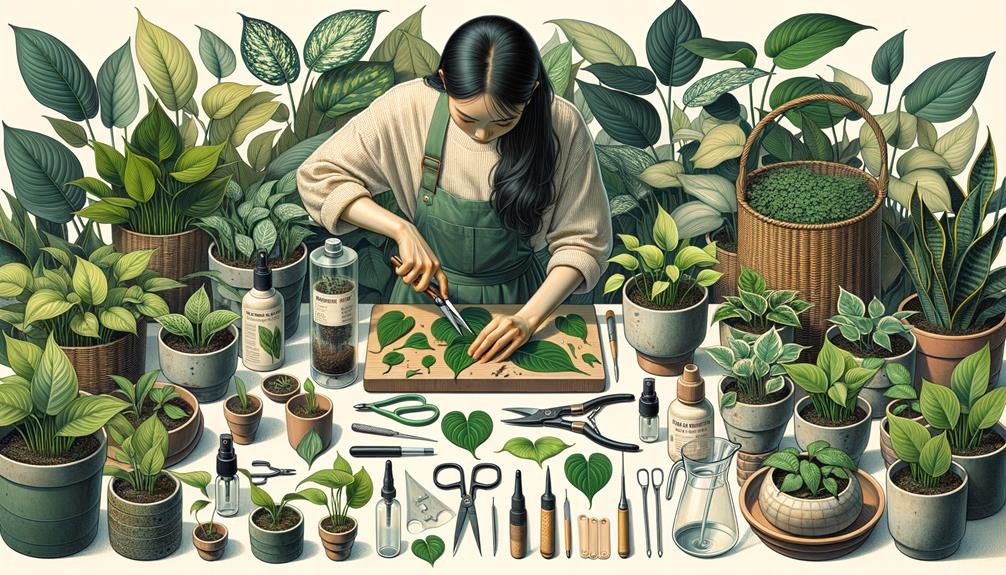
To propagate plants successfully through leaf cuttings, choose healthy leaves with vibrant color and firm texture. Use sharp scissors to make clean cuts at the base, then let the end callus over before planting in well-draining mix. Apply rooting hormone powder sparingly for root growth. Guarantee proper light and moisture levels, and transplant rooted cuttings gently. Maintain a good watering schedule and provide appropriate care for thriving growth. This ultimate guide covers leaf selection, cutting preparation, potting mix choices, and more for successful propagation techniques. Expand your plant propagation knowledge with detailed tips and techniques.
Selecting the Right Leaves
When selecting leaves for propagation, make sure they're healthy and free from any signs of disease or pests. Look for leaves that are vibrant in color, firm to the touch, and free from spots or discoloration. Healthy leaves will give your propagation journey a strong start, ensuring successful growth and development.
Inspect the underside of the leaves as well, as pests often hide there. Choose leaves that aren't wilted or damaged, as they may struggle to root and grow into new plants. Remember, the quality of the leaves you select will directly impact the success of your propagation efforts.
Tools and Materials Needed
To successfully propagate plants from leaf cuttings, gather essential tools and materials for the process. You'll need a sharp, clean pair of scissors or pruning shears to make precise cuts on the leaves. Additionally, prepare a clean work surface, such as a cutting board or a sturdy table, to comfortably work on your leaf cuttings.
It's also beneficial to have a small container filled with rooting hormone powder to encourage root growth on your cuttings. A well-draining potting mix or propagation medium is essential for planting your leaf cuttings, ensuring they've the right conditions to develop roots. Lastly, have a spray bottle filled with water nearby to keep the cuttings moist during the propagation process.
Preparing the Leaf Cuttings
Now that you have gathered the necessary tools and materials, it's time to move on to preparing the leaf cuttings for propagation. Start by choosing healthy leaves that are free from damage or disease. Using a sharp, clean blade, make a clean cut at the base of the leaf stem, ensuring it's a few inches long. Remove any excess leaves at the base to leave a clean stem for planting.
Next, allow the cut end of the leaf to callus over for a day or two. This helps prevent rotting when the leaf is planted. Place the prepared leaf cuttings in a warm, dry location with indirect sunlight to promote callusing.
Once the leaf cuttings have callused, they're ready for planting. Gently insert the cut end of the leaf into a well-draining potting mix, ensuring the callused end is slightly buried. Water the soil lightly to keep it moist but not waterlogged.
Hormone Application Techniques
Consider applying rooting hormone to your leaf cuttings to promote faster and more successful root development. Rooting hormone is a beneficial tool that can help your cuttings establish roots more effectively.
To apply the hormone, dip the cut end of the leaf into the rooting hormone powder or solution. Make sure to tap off any excess hormone to avoid overapplication. The rooting hormone contains growth-promoting substances that encourage root development, giving your cuttings a better chance of survival.
When utilizing rooting hormone, it's crucial to follow the manufacturer's instructions for the best results. Different types of rooting hormone may have specific application guidelines, so be sure to read the label carefully.
After applying the hormone, plant the leaf cutting in a suitable potting mix and container to provide the ideal environment for root growth. With the help of rooting hormone and proper care, your leaf cuttings are more likely to thrive and develop into healthy plants.
Potting Mix and Containers
For best growth of your leaf cuttings, selecting the right potting mix and containers is essential. The potting mix you choose should be well-draining to prevent waterlogging, which can lead to root rot. A good mix can consist of equal parts peat moss, perlite, and coarse sand to provide the right balance of moisture retention and aeration. Make sure your containers have drainage holes at the bottom to allow excess water to escape, helping to maintain ideal soil moisture levels for healthy root development.
When selecting containers, opt for ones that are clean, sturdy, and have enough space for root growth. You can use plastic pots, clay pots, or even recycled containers as long as they provide ample room for the leaf cuttings to establish themselves. Remember to label your containers to keep track of the different plant varieties you're propagating.
Placement and Lighting Requirements
To guarantee successful growth of your leaf cuttings, place them in a location that receives abundant natural light throughout the day. Optimal placement involves finding a spot near a sunny window where sunlight can bathe the cuttings consistently. Make sure that the light is indirect to prevent scorching the delicate leaves.
When selecting the placement for your leaf cuttings, consider the direction of the light source. East-facing windows provide gentle morning light, ideal for promoting growth without the risk of overheating. If east-facing options are limited, west-facing windows can also work well, offering bright afternoon light.
Avoid placing your cuttings in areas with minimal light, such as far corners of a room or spots blocked by buildings or trees. Adequate light exposure is essential for photosynthesis, the process that allows plants to produce energy for growth.
Watering and Humidity Tips
Ensure that your leaf cuttings receive sufficient watering and maintain ideal humidity levels to support healthy growth. When it comes to watering, make sure to keep the soil consistently moist but not waterlogged. You can achieve this by watering your cuttings when the top layer of soil feels dry to the touch. Use room temperature water to avoid shocking the plants. Remember not to let the soil dry out completely or become too soggy, as both extremes can harm your cuttings.
In terms of humidity, consider placing a humidity tray filled with water near your leaf cuttings to create a more humid environment. Misting the air around your cuttings occasionally can also help maintain adequate humidity levels. Aim for a humidity level of around 50-60% for best growth. If you notice the leaves starting to wilt or curl, it may be a sign that the humidity levels are too low.
Monitoring Growth Progress
Monitor the advancement of your leaf cuttings by consistently observing and documenting their growth progress. Keep a close eye on the development of new roots and leaves. Look for any signs of wilting, discoloration, or stunted growth. Measure the height of the new growth periodically to track their progress. Take note of any changes in the overall appearance of the cuttings.
It's essential to create a growth journal or record to document any observations you make. Note down the date, growth measurements, and any changes you notice. This record will help you track the growth patterns and identify any issues that may arise. Regular monitoring and documentation will give you valuable insights into the health and progress of your leaf cuttings.
Troubleshooting Common Issues
Identify common issues that may arise during the propagation of leaf cuttings to effectively troubleshoot and address them.
One common problem is overwatering, which can lead to rotting of the cutting. Make sure the soil is well-draining and only water when the top layer feels dry.
Another issue is improper humidity levels, which can cause the cutting to wilt. You can increase humidity by covering the cutting with a plastic dome or placing it in a humidity tray.
Inadequate light is also a common problem; ensure your cutting receives enough indirect sunlight to support growth.

Pests such as spider mites or aphids may infest your leaf cutting. To combat this, gently wipe the leaves with a damp cloth or use insecticidal soap.
Additionally, yellowing or browning of leaves could indicate nutrient deficiencies. Consider using a balanced liquid fertilizer to provide essential nutrients.
Transplanting Rooted Cuttings
When transplanting rooted cuttings, carefully loosen the soil around the roots to avoid damaging them. Gently grasp the base of the cutting and support the root system as you lift it from its current container. Prepare a new container with well-draining soil and create a hole slightly larger than the root system of the cutting. Lower the cutting into the hole, ensuring that the roots are spread out and covered with soil. Press the soil gently around the base of the cutting to secure it in place. Water the newly transplanted cutting thoroughly but avoid waterlogging the soil.
Remember to place the newly transplanted cutting in a location with appropriate light conditions for its specific plant species. Monitor the soil moisture regularly and adjust your watering schedule as needed to promote healthy growth. With proper care and attention, your rooted cuttings will establish themselves in their new environment and thrive.
Frequently Asked Questions
Can Leaf Cuttings Be Taken From Any Type of Plant, or Are There Specific Types That Work Best?
Yes, leaf cuttings can be taken from various types of plants, but some plants work better than others. Plants with succulent leaves, like jade plants or African violets, tend to root well from leaf cuttings. Avoid plants with thin, delicate leaves as they may not propagate successfully.
Research the specific plant you want to propagate to determine the best method for leaf cuttings. Remember, not all plants will root from leaf cuttings.
How Long Does It Typically Take for Leaf Cuttings to Root and Start Growing New Plants?
Rooting times for leaf cuttings vary by plant type, but typically, it takes around 2-6 weeks for roots to develop. Once roots are established, new plant growth usually begins shortly after.
Factors like temperature, humidity, and plant species can influence rooting times. Regularly check the cuttings for progress, ensuring they have the right conditions for successful growth.
Patience is key, as some plants may take longer to root than others.
Is It Possible to Propagate Multiple Plants From a Single Leaf Cutting, or Do You Need to Use Separate Cuttings for Each New Plant?
Yes, you can propagate multiple plants from a single leaf cutting. This method allows for more efficient plant propagation. By carefully selecting healthy leaves and providing proper care, each leaf can potentially develop into a new plant.
It's crucial to guarantee the cutting has enough nutrients and light for successful growth. With the right conditions, you can multiply your plants effectively using single leaf cuttings.
Are There Any Special Techniques or Tips for Caring for Leaf Cuttings During the Rooting Process?
When tending to leaf cuttings during the rooting process, it's crucial to keep the soil consistently moist but not waterlogged.
Place the cuttings in a warm, bright location but out of direct sunlight to prevent wilting.
Mist the leaves occasionally to maintain humidity levels.
Avoid disturbing the cuttings once they're in place to allow for successful root development.
Patience is key as rooting times can vary depending on the plant species.
Can Leaf Cuttings Be Successfully Propagated in Water, or Is It Better to Use a Potting Mix Right Away?
You can successfully propagate leaf cuttings in water, but using a potting mix right away may yield better results. Water propagation is doable but can sometimes lead to weaker roots. Potting mix provides more stability and nutrients for the cutting to grow strong roots.
Experiment with both methods to see what works best for your specific plant species. Remember, consistency in care is key for successful propagation.
Conclusion
To sum up, mastering the art of leaf cuttings requires attention to detail and patience. By following the steps outlined in this guide, you can successfully propagate new plants from healthy leaves.
Remember to choose the right leaves, use the proper tools, apply hormones carefully, and provide the necessary care for peak growth.
With dedication and proper techniques, you can enjoy the satisfaction of watching your cuttings develop into thriving plants.
Good luck with your gardening endeavors!


